
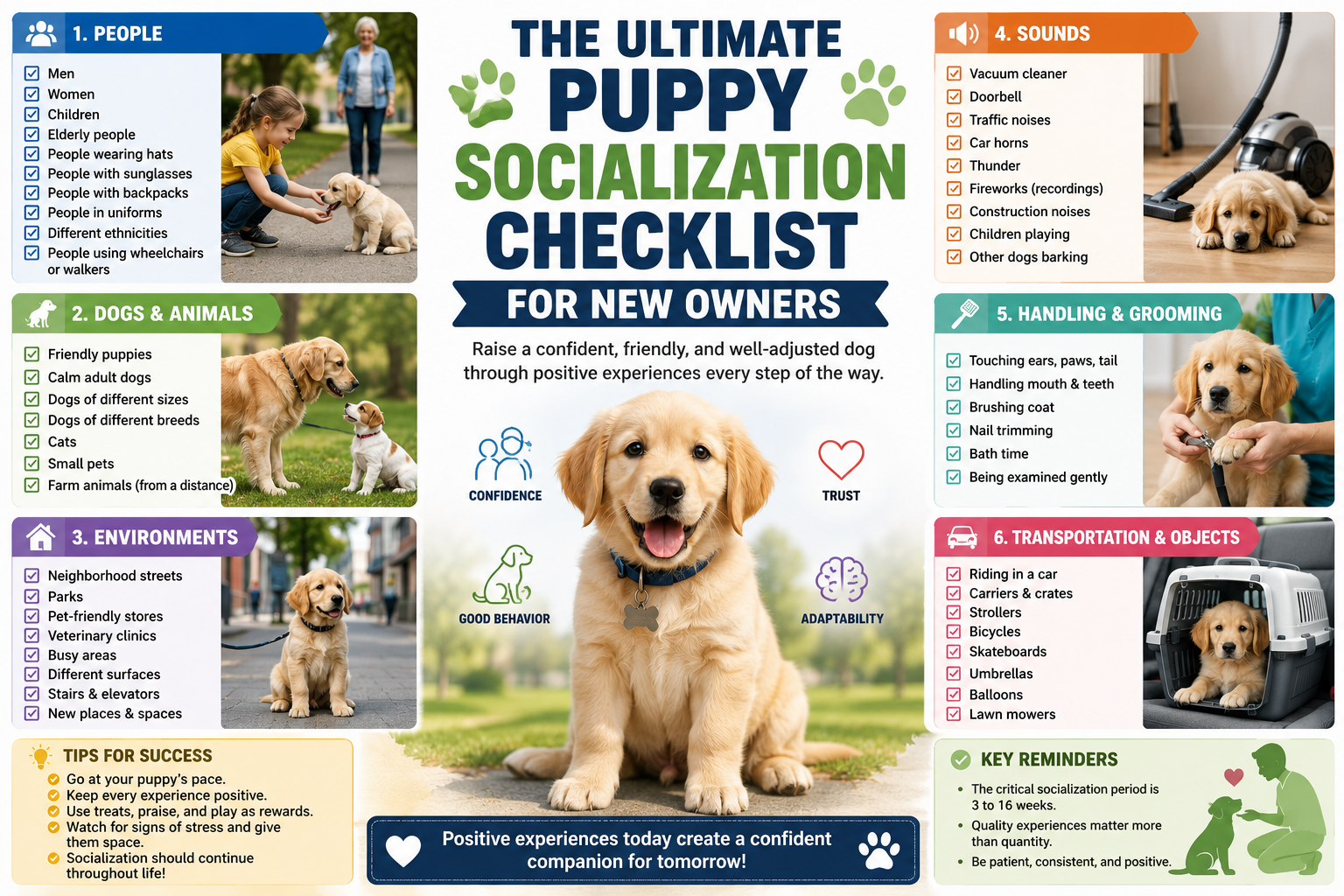
The Ultimate Puppy Socialization Checklist for New Owners – Bringing home a new puppy is one of the most exciting experiences for any dog lover. Puppies are naturally curious, eager to learn, and ready to explore the world around them. However, the experiences they have during their early months can significantly influence their behavior for the rest of their lives.
One of the most important responsibilities of a new dog owner is proper socialization. Socialization helps puppies become confident, friendly, and adaptable adults. A well-socialized puppy is more likely to handle new situations calmly and less likely to develop fear-based behaviors later in life.
This ultimate puppy socialization checklist will help you introduce your puppy to a wide variety of people, environments, sounds, and experiences in a safe and positive way.
What Is Puppy Socialization?
Puppy socialization is the process of exposing your puppy to different sights, sounds, people, animals, and situations during their critical developmental period.
Most experts consider the primary socialization window to occur between 3 and 16 weeks of age. During this time, puppies are especially receptive to learning about the world.
Positive experiences during this period can help create a confident and emotionally stable adult dog.
Socialization does not mean forcing a puppy into stressful situations. Instead, it involves creating positive experiences that help your puppy feel safe and comfortable.
Why Socialization Matters
Proper socialization provides numerous lifelong benefits.
Builds Confidence
Confident dogs are less likely to become fearful when encountering new situations.
Reduces Anxiety
Early exposure helps puppies learn that unfamiliar experiences are not necessarily threatening.
Prevents Behavioral Problems
Many behavior issues, including fear aggression and excessive barking, can be linked to poor socialization.
Improves Adaptability
A well-socialized dog can handle travel, visitors, veterinary visits, and everyday changes more easily.
Strengthens Human-Dog Relationships
Socialized puppies are generally easier to train and more enjoyable companions.
Socialization Safety First
Before starting your socialization journey, remember that your puppy’s health is important.
Consult your veterinarian regarding vaccination schedules and safe exposure levels.
Avoid areas with unknown vaccination histories while your puppy is still completing its vaccinations.
Focus on controlled, positive experiences rather than overwhelming adventures.
People Socialization Checklist
Your puppy should learn that people come in many different appearances and personalities.
Introduce your puppy to:
- Men
- Women
- Teenagers
- Children
- Elderly individuals
- People wearing hats
- People wearing sunglasses
- People with umbrellas
- People using wheelchairs
- People using walkers
- People with backpacks
- People wearing uniforms
- Individuals with beards
- People speaking loudly
- People speaking softly
Ensure every interaction remains positive and gentle.
Reward calm behavior with treats and praise.
Dog and Animal Socialization Checklist
Learning appropriate behavior around animals is essential.
Safely introduce your puppy to:
- Friendly vaccinated puppies
- Calm adult dogs
- Dogs of different sizes
- Dogs of different breeds
- Dogs with long coats
- Dogs with short coats
- Cats
- Small household pets (when appropriate)
- Farm animals from a safe distance
Monitor all interactions closely.
Never force your puppy into contact if they appear nervous.
Allow them to approach at their own pace.
Environmental Socialization Checklist
Puppies should experience a variety of environments while feeling secure.
Introduce your puppy to:
- Neighborhood streets
- Parks
- Sidewalks
- Pet-friendly stores
- Veterinary clinics
- Outdoor cafes
- Parking lots
- Apartment buildings
- Elevators
- Different flooring surfaces
- Grass
- Sand
- Gravel
- Wood floors
- Tile floors
- Stairs
- Ramps
Each new environment helps your puppy develop confidence and adaptability.
Sound Socialization Checklist
Unexpected sounds often trigger fear in poorly socialized dogs.
Gradually expose your puppy to:
- Vacuum cleaners
- Washing machines
- Doorbells
- Televisions
- Hair dryers
- Kitchen appliances
- Traffic sounds
- Car horns
- Sirens
- Thunder recordings
- Fireworks recordings
- Construction noises
- Children playing
- Barking dogs
Begin at low volume levels and reward relaxed behavior.
Increase exposure gradually over time.
Handling and Grooming Checklist
Dogs that are comfortable being touched are often easier to groom and examine.
Practice gently handling:
- Ears
- Paws
- Tail
- Teeth
- Mouth
- Belly
- Neck
- Nails
Introduce grooming tools such as:
- Brushes
- Nail clippers
- Toothbrushes
- Towels
Pair handling sessions with treats and praise to create positive associations.
Transportation Checklist
Many dogs become anxious during travel because they were never properly introduced to vehicles.
Help your puppy become comfortable with:
- Sitting inside a parked car
- Short car rides
- Longer drives
- Carriers
- Travel crates
- Public transportation where permitted
Reward calm behavior during each step.
Everyday Objects Checklist
Numerous household items can appear strange or frightening to puppies.
Safely introduce your puppy to:
- Vacuum cleaners
- Bicycles
- Skateboards
- Strollers
- Lawn mowers
- Garbage bins
- Garden tools
- Delivery carts
- Balloons
- Mirrors
Allow your puppy to observe and investigate at a comfortable distance.
Training and Learning Experiences
Socialization is closely connected to training.
Expose your puppy to:
- Basic obedience classes
- Reward-based training sessions
- New commands
- Puzzle toys
- Interactive games
- Mental enrichment activities
Positive learning experiences help build confidence and trust.
Body Language to Watch For
During socialization, always monitor your puppy’s comfort level.
Signs of confidence include:
- Relaxed posture
- Curious behavior
- Soft eyes
- Loose tail movement
- Willingness to explore
Signs of stress may include:
- Trembling
- Hiding
- Excessive panting
- Tail tucked tightly
- Refusal of treats
- Attempting to escape
If your puppy appears overwhelmed, reduce the intensity of the experience and allow them to recover.
Common Socialization Mistakes
Doing Too Much Too Soon
Overwhelming a puppy with too many experiences at once can create fear rather than confidence.
Introduce new situations gradually.
Forcing Interactions
Never force your puppy to greet people or animals.
Allow them to choose their level of participation.
Ignoring Fear Signals
Recognizing signs of discomfort is critical.
Respect your puppy’s limits and build confidence slowly.
Using Punishment
Punishment can increase anxiety and damage trust.
Focus on positive reinforcement instead.
Stopping Socialization Too Early
Socialization should continue throughout your dog’s life.
Ongoing exposure helps maintain confidence and adaptability.
Creating a Socialization Plan
The most successful owners approach socialization systematically.
Aim to introduce your puppy to:
- New people weekly
- New environments weekly
- New sounds regularly
- New objects regularly
- Positive dog interactions frequently
Keep a simple journal or checklist to track your puppy’s experiences.
This helps identify areas that may need additional exposure.
The Importance of Positive Experiences
The quality of experiences matters more than the quantity.
One positive interaction can be more valuable than several stressful encounters.
Always pair new experiences with:
- Treats
- Praise
- Toys
- Playtime
- Encouragement
The goal is to teach your puppy that new things are safe and rewarding.
Final Thoughts Puppy Socialization Checklist
Socialization is one of the greatest gifts you can give your puppy. By carefully introducing your dog to different people, animals, environments, sounds, and experiences, you help build the foundation for a confident, friendly, and well-adjusted adult dog.
This ultimate puppy socialization checklist serves as a guide to ensure your puppy develops the skills needed to navigate the world comfortably. Remember that socialization is not a race. Every puppy learns at its own pace, and positive experiences are far more important than rapid exposure.
With patience, consistency, and plenty of encouragement, you’ll help your puppy grow into a happy companion that feels secure and confident in almost any situation life brings.