
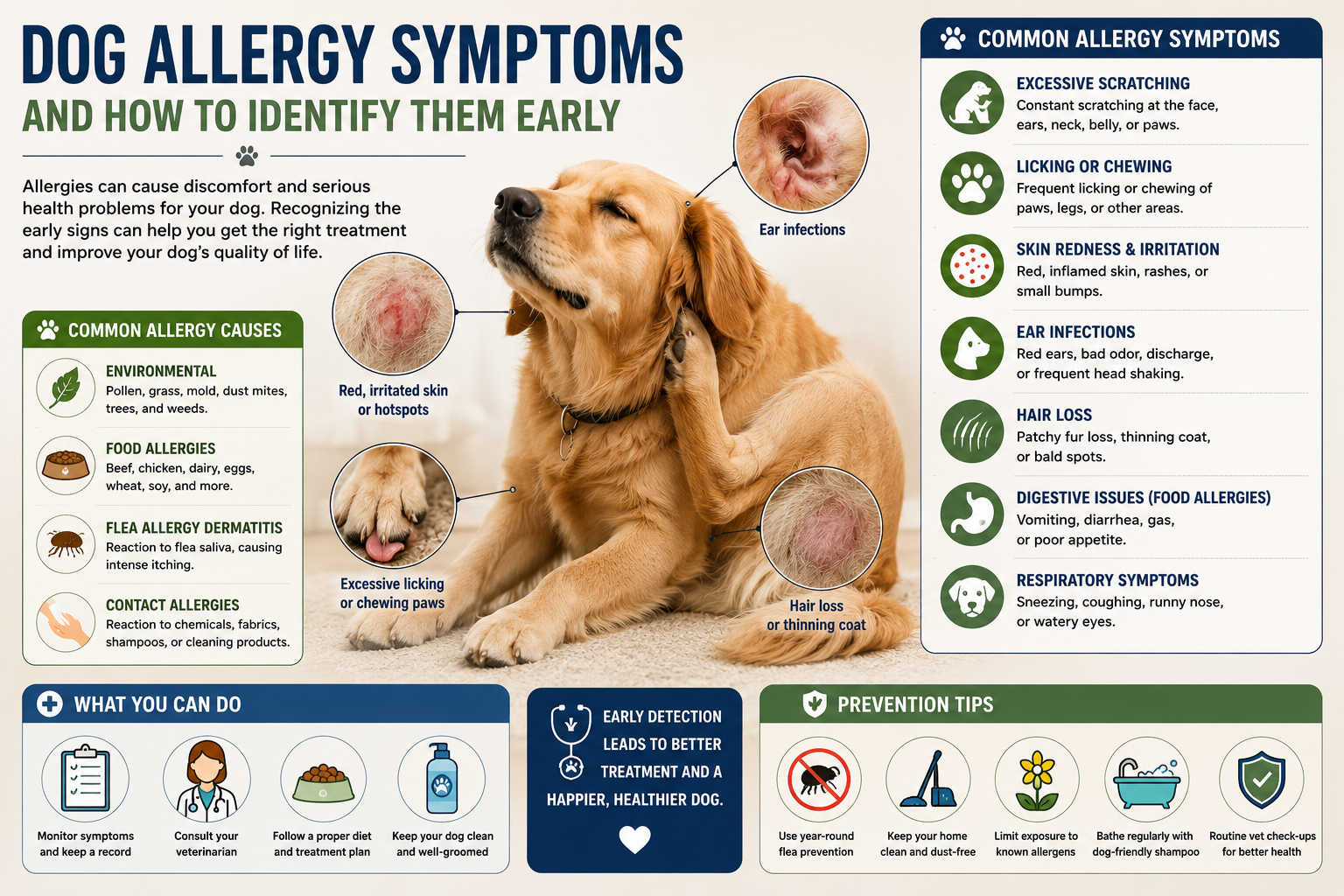
Dog Allergy Symptoms and How to Identify Them Early – Allergies are one of the most common health issues affecting dogs today. Just like humans, dogs can develop allergic reactions to food, environmental triggers, insect bites, and various substances they encounter in everyday life. While some allergy symptoms may appear mild at first, untreated allergies can lead to chronic discomfort, skin infections, ear problems, and a reduced quality of life.
The challenge for many pet owners is recognizing the early signs. Dogs cannot tell us when something is bothering them, so it is important to understand the symptoms and know when professional help may be needed.
This guide explains the most common dog allergy symptoms, potential causes, methods of diagnosis, and ways to help your dog live a healthier, more comfortable life.
What Are Dog Allergies?
An allergy occurs when a dog’s immune system overreacts to a normally harmless substance. These substances, known as allergens, trigger an inflammatory response that can affect the skin, ears, digestive system, or respiratory tract.
Some dogs are genetically predisposed to allergies, while others develop sensitivities over time through repeated exposure to certain allergens.
Allergies can affect dogs of any age, breed, or size, although some breeds appear more susceptible than others.
Common Types of Dog Allergies
Understanding the different types of allergies can help owners identify potential triggers.
Environmental Allergies
Environmental allergies, often called atopic dermatitis, are among the most common canine allergies.
Common environmental allergens include:
- Pollen
- Grass
- Mold spores
- Dust mites
- Household dust
- Trees and weeds
Symptoms may appear seasonally or throughout the year depending on the trigger.
Food Allergies
Food allergies develop when a dog’s immune system reacts to a specific ingredient.
Common food allergens include:
- Beef
- Chicken
- Dairy products
- Eggs
- Wheat
- Soy
Unlike environmental allergies, food allergies often produce year-round symptoms.
Flea Allergy Dermatitis
Some dogs are highly sensitive to flea saliva.
Even a single flea bite can trigger intense itching and discomfort in susceptible dogs.
Contact Allergies
Contact allergies occur when a dog’s skin reacts to direct exposure to a substance.
Possible triggers include:
- Cleaning products
- Certain fabrics
- Lawn chemicals
- Shampoos
- Plastic materials
Although less common, contact allergies can cause significant skin irritation.
Early Dog Allergy Symptoms
Recognizing allergy symptoms early can help prevent complications and improve treatment outcomes.
Excessive Scratching
Persistent scratching is one of the most common signs of allergies.
Dogs may scratch:
- Ears
- Face
- Neck
- Belly
- Paws
- Tail area
Frequent scratching should never be ignored, especially if it continues for several days or weeks.
Licking and Chewing the Paws
Many dogs with allergies repeatedly lick or chew their feet.
Owners may notice:
- Red paws
- Discolored fur
- Swelling between toes
- Constant licking behavior
This symptom is particularly common in dogs with environmental allergies.
Skin Redness and Irritation
Inflamed skin often appears as:
- Red patches
- Pink skin
- Irritated areas
- Warm spots
These symptoms may worsen during allergy flare-ups.
Hair Loss
Excessive scratching and chewing can damage the coat and lead to hair loss.
Common areas include:
- Legs
- Belly
- Tail base
- Neck
Patchy fur loss often indicates ongoing skin irritation.
Recurrent Ear Infections
Ear problems are a frequent sign of allergies.
Symptoms include:
- Head shaking
- Ear scratching
- Redness inside the ears
- Unpleasant odor
- Ear discharge
Repeated ear infections often indicate an underlying allergy issue.
Digestive Symptoms of Food Allergies
Food allergies can affect the digestive system as well as the skin.
Vomiting
Recurring vomiting after meals may suggest a food-related sensitivity.
Diarrhea
Chronic diarrhea is one of the most common digestive symptoms associated with food allergies.
Gas and Digestive Upset
Dogs with food sensitivities may experience:
- Excessive gas
- Stomach discomfort
- Irregular bowel movements
Reduced Appetite
Some dogs lose interest in food when digestive discomfort becomes persistent.
Respiratory Allergy Symptoms
Although less common than skin-related reactions, some allergies affect the respiratory system.
Symptoms may include:
- Sneezing
- Coughing
- Runny nose
- Watery eyes
- Breathing difficulties
Respiratory symptoms should always be evaluated by a veterinarian, especially if they appear suddenly.
Secondary Symptoms Caused by Allergies
If allergies remain untreated, secondary complications can develop.
Hot Spots
Hot spots are painful, inflamed skin lesions caused by excessive licking, scratching, or chewing.
They often appear suddenly and can worsen rapidly.
Skin Infections
Damaged skin provides an opportunity for bacteria and yeast to multiply.
Signs include:
- Odor
- Oozing skin
- Increased redness
- Crust formation
Behavioral Changes
Chronic discomfort can affect a dog’s mood and behavior.
Some dogs become:
- Irritable
- Restless
- Less playful
- More withdrawn
Behavioral changes may be linked to ongoing allergy-related discomfort.
Breeds More Prone to Allergies
While any dog can develop allergies, certain breeds may have a higher risk.
Examples include:
- Labrador Retrievers
- Golden Retrievers
- Bulldogs
- Boxers
- West Highland White Terriers
- German Shepherds
- Cocker Spaniels
- French Bulldogs
Breed predisposition does not guarantee allergies, but it can increase susceptibility.
How Veterinarians Diagnose Allergies
Diagnosing allergies often requires a thorough evaluation.
Your veterinarian may use:
Physical Examination
A detailed examination helps identify affected areas and rule out other conditions.
Medical History
Information about diet, environment, symptom timing, and previous health issues can provide valuable clues.
Elimination Diet Trials
For suspected food allergies, veterinarians may recommend a special diet for several weeks.
This process helps identify problematic ingredients.
Allergy Testing
Skin or blood testing may be used to identify environmental allergens.
Although not perfect, these tests can assist in developing treatment plans.
Treatment Options for Dog Allergies
Treatment depends on the specific cause of the allergy.
Avoiding Allergens
Whenever possible, reducing exposure to known allergens is the most effective strategy.
Examples include:
- Frequent cleaning
- Air filtration systems
- Avoiding certain foods
- Limiting exposure to specific plants
Medications
Veterinarians may prescribe medications to control itching and inflammation.
These may include:
- Antihistamines
- Anti-inflammatory medications
- Prescription allergy treatments
Always follow veterinary guidance regarding medication use.
Special Diets
Dogs with food allergies often benefit from limited-ingredient or prescription diets.
Dietary management can significantly reduce symptoms.
Flea Prevention
Consistent flea control is essential for dogs with flea allergy dermatitis.
Year-round prevention is often recommended.
Skin Care
Medicated shampoos and skin treatments may help soothe irritation and improve skin health.
Preventing Allergy Flare-Ups
Although allergies cannot always be prevented, certain habits can reduce symptom severity.
Helpful strategies include:
- Regular grooming
- Frequent bathing when recommended
- Routine flea prevention
- High-quality nutrition
- Keeping bedding clean
- Vacuuming regularly
- Monitoring seasonal allergy patterns
Preventive care can make a significant difference in managing chronic allergies.
When to See a Veterinarian
You should seek veterinary advice if your dog experiences:
- Persistent itching
- Recurrent ear infections
- Hair loss
- Skin sores
- Digestive problems
- Sudden allergic reactions
- Breathing difficulties
Early intervention often leads to better outcomes and prevents more serious complications.
Final Thoughts
Dog allergies can significantly affect a pet’s comfort, health, and happiness. Excessive scratching, paw licking, ear infections, skin irritation, digestive issues, and hair loss are among the most common warning signs that every owner should recognize.
The key to successful allergy management is early identification. By paying attention to subtle symptoms and seeking veterinary guidance when needed, owners can help prevent chronic discomfort and improve their dog’s quality of life.
Every dog deserves to feel comfortable in its own skin. Understanding dog allergy symptoms and addressing them promptly is one of the best ways to support your pet’s long-term health and well-being.