
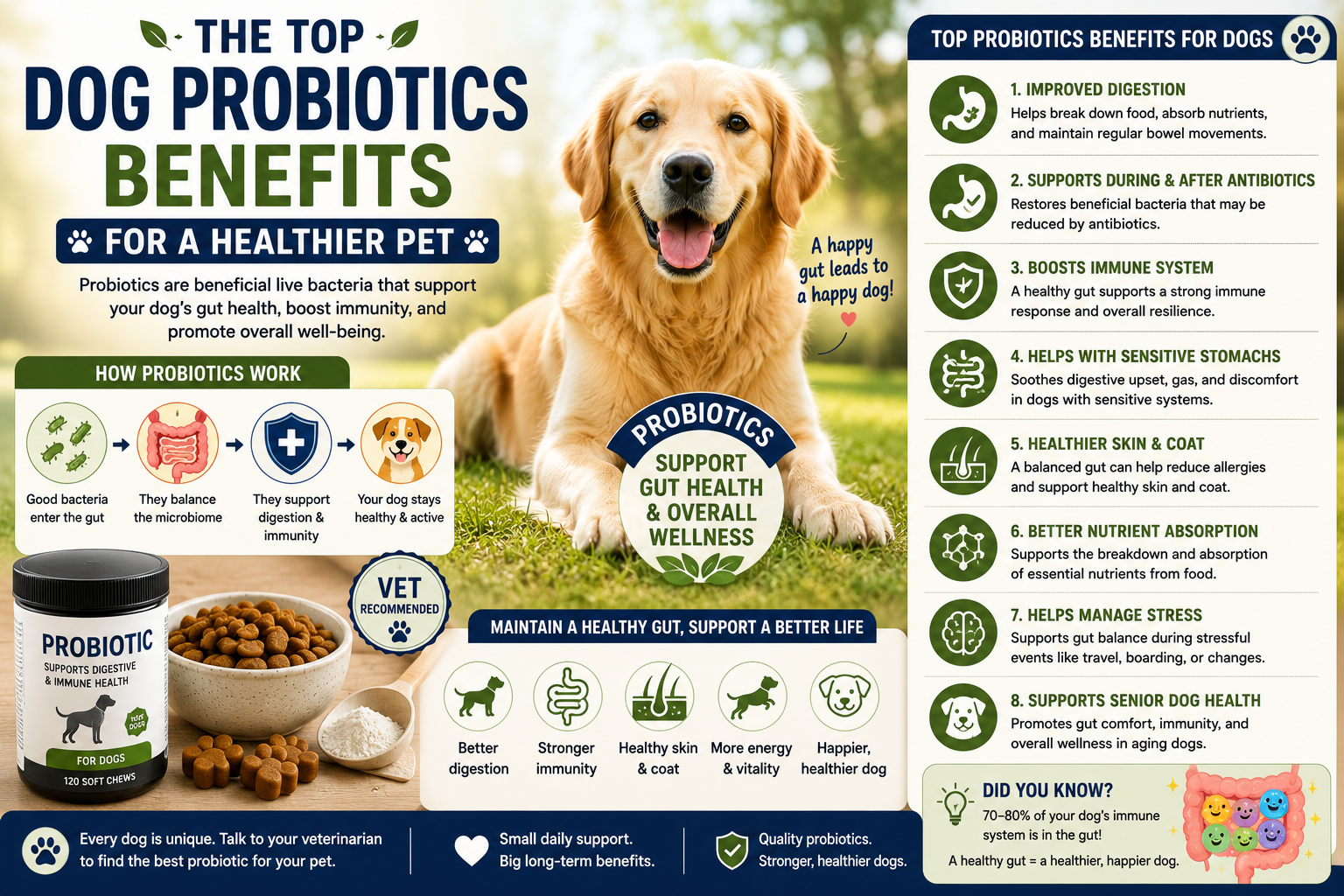
The Top Dog Probiotics Benefits for a Healthier Pet – As pet owners become more focused on preventive health care, dog probiotics have emerged as one of the most popular supplements in canine wellness. From improving digestion to supporting immune function, probiotics are increasingly being used to help dogs maintain a healthy gut and overall well-being.
The growing interest in dog probiotics benefits is driven by new research on the canine microbiome—the community of beneficial bacteria that lives in a dog’s digestive tract. Scientists now recognize that gut health plays a vital role in digestion, nutrient absorption, immunity, and even behavior. When the balance of these microorganisms is disrupted, dogs may experience digestive issues, skin problems, allergies, and other health concerns.
This guide explores the top dog probiotics benefits, how probiotics work, and whether they might be a valuable addition to your dog’s health routine.
What Are Probiotics for Dogs?
Probiotics are live beneficial microorganisms, primarily bacteria and certain types of yeast, that support a healthy digestive system. These friendly microbes naturally live in your dog’s gastrointestinal tract and help maintain a balanced microbiome.
A healthy microbiome contributes to:
- Proper digestion
- Nutrient absorption
- Immune system support
- Protection against harmful bacteria
- Healthy bowel movements
When this balance is disrupted by stress, illness, antibiotics, dietary changes, or aging, probiotics may help restore beneficial bacteria and support overall health.
Understanding the Canine Gut Microbiome
The digestive tract contains billions of microorganisms that work together to support health.
These microorganisms help:
- Break down food
- Produce certain vitamins
- Support immune responses
- Maintain intestinal barrier function
- Compete against harmful pathogens
Research shows that disruptions in the microbiome, often called dysbiosis, may contribute to digestive disorders and other health problems in dogs. Probiotics are designed to help restore and maintain microbial balance.
Benefit #1: Improved Digestive Health
One of the most recognized benefits of probiotics is digestive support.
Probiotics may help:
- Maintain regular bowel movements
- Improve stool quality
- Support nutrient digestion
- Reduce occasional digestive upset
Veterinary sources note that dog probiotics benefits are commonly recommended during periods of digestive stress, including dietary transitions and recovery from gastrointestinal disturbances.
Many dog owners report firmer stools and more consistent digestion after introducing a veterinarian-approved probiotic supplement. Community experiences shared online frequently mention improvements becoming noticeable after several weeks of consistent use.
Benefit #2: Support During and After Antibiotic Treatment
Antibiotics can be lifesaving medications, but they often affect both harmful and beneficial bacteria.
As a result, some dogs experience:
- Loose stools
- Digestive discomfort
- Changes in gut microbiota
Probiotics are often used to help restore healthy bacterial populations following antibiotic treatment and may assist in maintaining digestive balance during recovery.
Benefit #3: Strengthening the Immune System
A significant portion of immune activity is closely linked to the digestive tract.
Healthy gut bacteria help regulate immune responses and support the body’s natural defenses. Researchers have identified important interactions between the intestinal microbiome and immune function in both humans and animals.
By supporting a balanced gut environment, probiotics may contribute to stronger immune health and improved resilience against certain health challenges.
Benefit #4: Supporting Dogs with Sensitive Stomachs
Some dogs have naturally sensitive digestive systems.
These dogs may experience:
- Occasional diarrhea
- Gas
- Digestive discomfort
- Food sensitivities
Probiotics are frequently used as part of a broader digestive health strategy for dogs with sensitive stomachs. While results vary between individuals, many veterinarians consider dog probiotics benefits a useful tool for supporting gastrointestinal health.
Benefit #5: Potential Skin and Allergy Support
The relationship between gut health and skin health has become an area of growing interest.
Research suggests that maintaining a healthy microbiome may influence inflammatory responses and immune regulation. Some studies indicate probiotics may help support dogs dealing with allergy-related concerns and skin sensitivity.
While probiotics should not replace veterinary treatment for allergies, they may serve as part of a comprehensive wellness plan.
Benefit #6: Improved Nutrient Absorption
Even the highest-quality dog food cannot provide full benefits if nutrients are not properly absorbed.
Beneficial gut bacteria contribute to:
- Nutrient metabolism
- Digestive efficiency
- Vitamin production
- Healthy intestinal function
Research reviews have highlighted probiotics’ potential role in improving nutrient utilization and digestive performance in companion animals.
Benefit #7: Support During Stressful Situations
Dogs experience stress just like humans.
Common stress triggers include:
- Travel
- Boarding
- Moving to a new home
- Changes in routine
- Veterinary visits
Stress can affect digestive health and temporarily disrupt the gut microbiome. Veterinary experts often recommend probiotics during stressful periods to help support gastrointestinal stability.
Benefit #8: Supporting Senior Dog Health
As dogs age, digestive efficiency and immune function may gradually change.
Senior dogs often benefit from nutritional strategies that support:
- Digestive comfort
- Nutrient absorption
- Immune health
- Overall wellness
Probiotics may play a valuable role in maintaining gut health as part of a comprehensive senior care program.
Common Probiotic Strains for Dogs
Not all dog probiotics benefits are the same.
Several strains are commonly used in canine supplements, including:
- Lactobacillus species
- Bifidobacterium species
- Enterococcus species
- Bacillus species
- Saccharomyces yeast strains
Research indicates that specific strains may provide different benefits, which is why quality and formulation matter when selecting a product.
How to Choose a Quality Dog Probiotic
When shopping for a probiotic supplement, consider the following factors:
Veterinary Recommendation
Choose products recommended by veterinarians or supported by scientific research.
Clearly Identified Strains
Look for products that list specific probiotic strains rather than generic descriptions.
Quality Testing
Reliable manufacturers often perform quality and stability testing.
Appropriate Dosage
The supplement should provide a suitable number of live cultures for your dog’s size and needs.
Storage Instructions
Some dog probiotics benefits require refrigeration, while others remain stable at room temperature.
Are Probiotics Safe for Dogs?
For most healthy dogs, probiotics are considered safe when used appropriately.
However, owners should:
- Follow label instructions
- Consult a veterinarian before starting supplementation
- Monitor for digestive changes
- Use products formulated specifically for dogs
Dog-specific probiotics are generally preferred because they are designed for the canine digestive system.
What Dog Owners Are Saying
Online discussions reveal mixed but generally positive experiences with probiotics.
Many owners report:
- Improved stool consistency
- Reduced digestive upset
- Less gas
- Better overall digestive health
Others note that results can depend on the specific strain, dosage, and underlying health issue. Some community members emphasize that dog probiotics benefits work best alongside a consistent diet and healthy lifestyle.
Final Thoughts
The growing interest in canine gut health has brought probiotics into the spotlight, and for good reason. Research suggests that probiotics may support digestion, immune function, nutrient absorption, skin health, and overall wellness by helping maintain a balanced gut microbiome. While probiotics are not a cure-all, they can be a valuable addition to a dog’s health plan when chosen carefully and used appropriately.
As with any supplement, the best approach is to consult your veterinarian before introducing probiotics into your dog’s routine. With the right product and consistent use, probiotics may help your dog enjoy better digestive health and a happier, healthier life.