
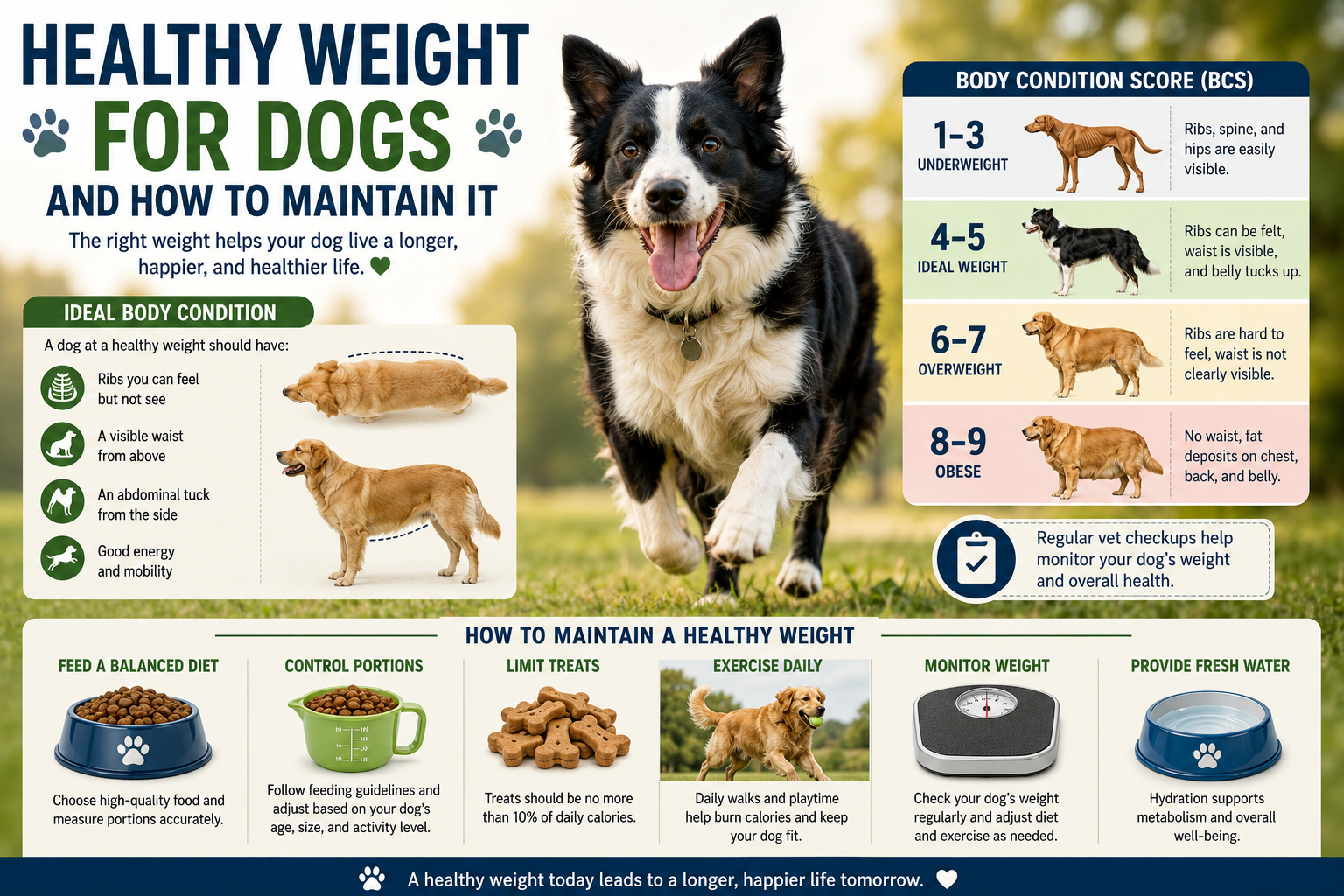
Healthy Weight for Dogs and How to Maintain It – Maintaining a healthy weight is one of the most important aspects of responsible dog ownership. While many pet owners focus on nutrition, exercise, grooming, and veterinary care, weight management is often overlooked until a problem develops. Unfortunately, both obesity and being underweight can negatively impact a dog’s health, energy levels, mobility, and lifespan.
In recent years, veterinarians have reported increasing rates of canine obesity worldwide. Excess weight places additional strain on a dog’s joints, heart, lungs, and internal organs. On the other hand, dogs that are underweight may struggle with poor muscle condition, weakened immunity, and nutritional deficiencies.
Understanding what constitutes a Healthy Weight for Dogs and learning how to maintain it can significantly improve your pet’s quality of life. Whether you have a playful puppy, an active adult dog, or a senior companion, proper weight management plays a critical role in long-term health.
Why a Healthy Weight Matters
A dog’s weight affects nearly every aspect of its health.
Maintaining a Healthy Weight for Dogs can help:
- Improve mobility and flexibility
- Reduce stress on joints
- Lower the risk of chronic diseases
- Improve cardiovascular health
- Support healthy digestion
- Increase energy levels
- Enhance quality of life
- Potentially extend lifespan
Research consistently shows that dogs maintained at an ideal body condition often live longer and experience fewer health complications than overweight dogs.
Understanding Body Condition Score
Veterinarians commonly use a Body Condition Score (BCS) system to evaluate whether a dog is underweight, ideal, overweight, or obese.
Most BCS scales range from 1 to 9:
Underweight (1–3)
Dogs may have:
- Easily visible ribs
- Prominent hip bones
- Minimal body fat
- Poor muscle condition
Ideal Weight (4–5)
A dog at a healthy weight generally has:
- Ribs that can be felt but not easily seen
- A visible waist when viewed from above
- An abdominal tuck when viewed from the side
- Good muscle tone
Overweight (6–7)
Signs include:
- Reduced waist definition
- Difficulty feeling ribs
- Noticeable fat deposits
Obese (8–9)
Obese dogs often show:
- No visible waist
- Significant fat accumulation
- Difficulty exercising
- Reduced mobility
The Body Condition Score is often more useful than weight alone because ideal weight varies significantly among breeds.
What Is a Healthy Weight for Dogs?
There is no single ideal weight that applies to every dog.
For example:
- Chihuahua: 2–6 pounds
- Beagle: 20–30 pounds
- Border Collie: 30–55 pounds
- Labrador Retriever: 55–80 pounds
- German Shepherd: 50–90 pounds
Breed, age, sex, and body structure all influence a dog’s ideal weight.
The best way to determine a Healthy Weight for Dogs is through regular veterinary evaluations combined with body condition assessments.
Common Causes of Weight Gain
Many factors contribute to canine weight gain.
Overfeeding
One of the most common causes is simply feeding too much food.
Many owners unintentionally provide portions larger than recommended.
Too Many Treats
Treats can add significant calories.
Popular treats often contain more calories than owners realize.
Lack of Exercise
Dogs that do not receive sufficient physical activity may burn fewer calories than they consume.
Aging
Older dogs often become less active while maintaining similar eating habits.
Medical Conditions
Certain health conditions may contribute to weight gain, including:
- Hypothyroidism
- Cushing’s disease
- Hormonal imbalances
Medications
Some medications may increase appetite or reduce activity levels.
Risks of Obesity in Dogs
Obesity is far more than a cosmetic issue.
Excess body fat increases the risk of numerous health problems.
Joint Problems
Additional weight places extra stress on joints.
This can worsen:
- Arthritis
- Hip dysplasia
- Mobility issues
Heart Disease
Overweight dogs may experience increased cardiovascular strain.
Diabetes
Obesity is a significant risk factor for diabetes in dogs.
Respiratory Difficulties
Excess fat can make breathing more difficult, particularly in brachycephalic breeds.
Reduced Lifespan
Studies suggest that overweight dogs often have shorter lifespans than dogs maintained at a healthy weight.
Risks of Being Underweight
While obesity receives significant attention, being underweight also presents challenges.
Potential risks include:
- Nutritional deficiencies
- Muscle loss
- Reduced immune function
- Poor energy levels
- Increased vulnerability to illness
Unexplained weight loss should always be evaluated by a veterinarian.
How to Assess Your Dog at Home
You can perform a basic weight assessment at home.
Check the Ribs
Place your hands gently over your dog’s ribcage.
You should be able to feel the ribs without excessive pressure.
Look From Above
Observe your dog while standing.
A noticeable waist should be visible behind the ribs.
View From the Side
The abdomen should tuck upward rather than hanging straight down.
These simple observations can help determine whether your dog is maintaining a Healthy Weight for Dogs.
Nutrition and Weight Management
Diet plays the biggest role in weight control.
Measure Food Accurately
Avoid estimating portions.
Using a measuring cup or kitchen scale improves accuracy.
Follow Feeding Guidelines
Food packaging provides starting recommendations.
However, individual needs may vary.
Choose High-Quality Food
Look for foods containing:
- Quality animal proteins
- Balanced nutrients
- Appropriate calorie levels
Avoid Excess Table Scraps
Human food can quickly increase calorie intake.
Some foods may also be harmful to dogs.
The Importance of Protein
Protein supports:
- Muscle maintenance
- Tissue repair
- Healthy metabolism
High-quality protein sources include:
- Chicken
- Turkey
- Beef
- Lamb
- Fish
- Eggs
Adequate protein helps maintain lean body mass during weight management.
Portion Control Strategies
Portion control is often the most effective tool for preventing weight gain.
Helpful tips include:
- Use measuring cups consistently
- Divide meals into scheduled portions
- Avoid free feeding
- Track treats throughout the day
Small adjustments can produce significant results over time.
Managing Treat Intake
Treats should generally represent no more than 10% of daily calories.
Healthier options may include:
- Small pieces of carrot
- Green beans
- Cucumber slices
- Vet-approved low-calorie treats
Treat moderation is essential for maintaining a Healthy Weight for Dogs.
Exercise and Physical Activity
Exercise works alongside nutrition to maintain healthy body condition.
Daily Walks
Walking remains one of the best forms of exercise for most dogs.
Benefits include:
- Calorie burning
- Mental stimulation
- Improved cardiovascular health
Play Sessions
Interactive games can increase activity levels.
Examples include:
- Fetch
- Tug games
- Hide-and-seek
Swimming
Swimming provides low-impact exercise that is especially helpful for dogs with joint concerns.
Agility and Sports
Active dogs may enjoy:
- Agility training
- Flyball
- Canicross
- Obedience activities
Weight Management for Puppies
Puppies require careful nutritional balance.
Rapid growth should be supported without encouraging excessive weight gain.
Tips include:
- Feeding age-appropriate puppy food
- Monitoring growth regularly
- Avoiding excessive treats
- Following veterinary recommendations
Proper nutrition during puppyhood helps establish a foundation for a Healthy Weight for Dogs throughout life.
Weight Management for Senior Dogs
Senior dogs often become less active.
As metabolism slows, calorie needs may decrease.
Helpful strategies include:
- Adjusting portion sizes
- Maintaining regular exercise
- Monitoring body condition closely
- Choosing senior-specific diets when appropriate
Weight management becomes increasingly important as dogs age.
Breed Considerations
Different breeds have different body structures.
For example:
Lean Breeds
Breeds such as Greyhounds naturally appear slimmer.
Stockier Breeds
Bulldogs and similar breeds may have broader builds.
Comparisons should always be made against breed standards and body condition rather than weight alone.
Medical Conditions That Affect Weight
Unexpected changes in body weight may indicate health issues.
Conditions associated with weight loss include:
- Cancer
- Diabetes
- Kidney disease
- Digestive disorders
Conditions associated with weight gain include:
- Hypothyroidism
- Hormonal disorders
- Certain medications
Any unexplained weight change warrants veterinary evaluation.
Creating a Weight Management Plan
Successful weight management involves consistency.
A simple plan may include:
Step 1: Determine Current Condition
Assess weight and body condition score.
Step 2: Establish Goals
Work with your veterinarian to determine ideal weight.
Step 3: Adjust Nutrition
Modify calorie intake appropriately.
Step 4: Increase Activity
Develop an exercise routine suited to your dog’s age and fitness level.
Step 5: Monitor Progress
Track weight and body condition regularly.
Small, gradual changes are usually more effective than drastic adjustments.
Signs Your Dog Is at a Healthy Weight
Indicators of a Healthy Weight for Dogs include:
- Visible waistline
- Easily felt ribs
- Good muscle tone
- Strong energy levels
- Comfortable movement
- Consistent appetite
- Healthy coat condition
These signs suggest that nutritional and exercise needs are being met appropriately.
Common Weight Management Mistakes
Avoid these common errors:
Guessing Portion Sizes
Accurate measurement is essential.
Overusing Treats
Treat calories add up quickly.
Ignoring Activity Levels
Food intake should match energy expenditure.
Relying Solely on Weight
Body condition matters as much as the number on the scale.
Making Sudden Changes
Gradual adjustments are typically safer and more sustainable.
The Role of Veterinary Checkups
Routine veterinary visits provide valuable opportunities to monitor body condition.
Veterinarians can:
- Assess weight trends
- Evaluate body condition score
- Identify health concerns
- Recommend dietary changes
- Develop weight-loss plans if needed
Professional guidance helps ensure long-term success.
Final Thoughts
Maintaining a Healthy Weight for Dogs is one of the most effective ways to support long-term health, mobility, and happiness. Proper nutrition, portion control, regular exercise, and routine veterinary care all play important roles in achieving and maintaining ideal body condition.
Whether your dog is a growing puppy, an active adult, or a beloved senior companion, paying attention to weight can help prevent numerous health problems and improve quality of life. By understanding the factors that influence body condition and making thoughtful lifestyle choices, you can help your dog stay healthy, energetic, and comfortable for years to come.