
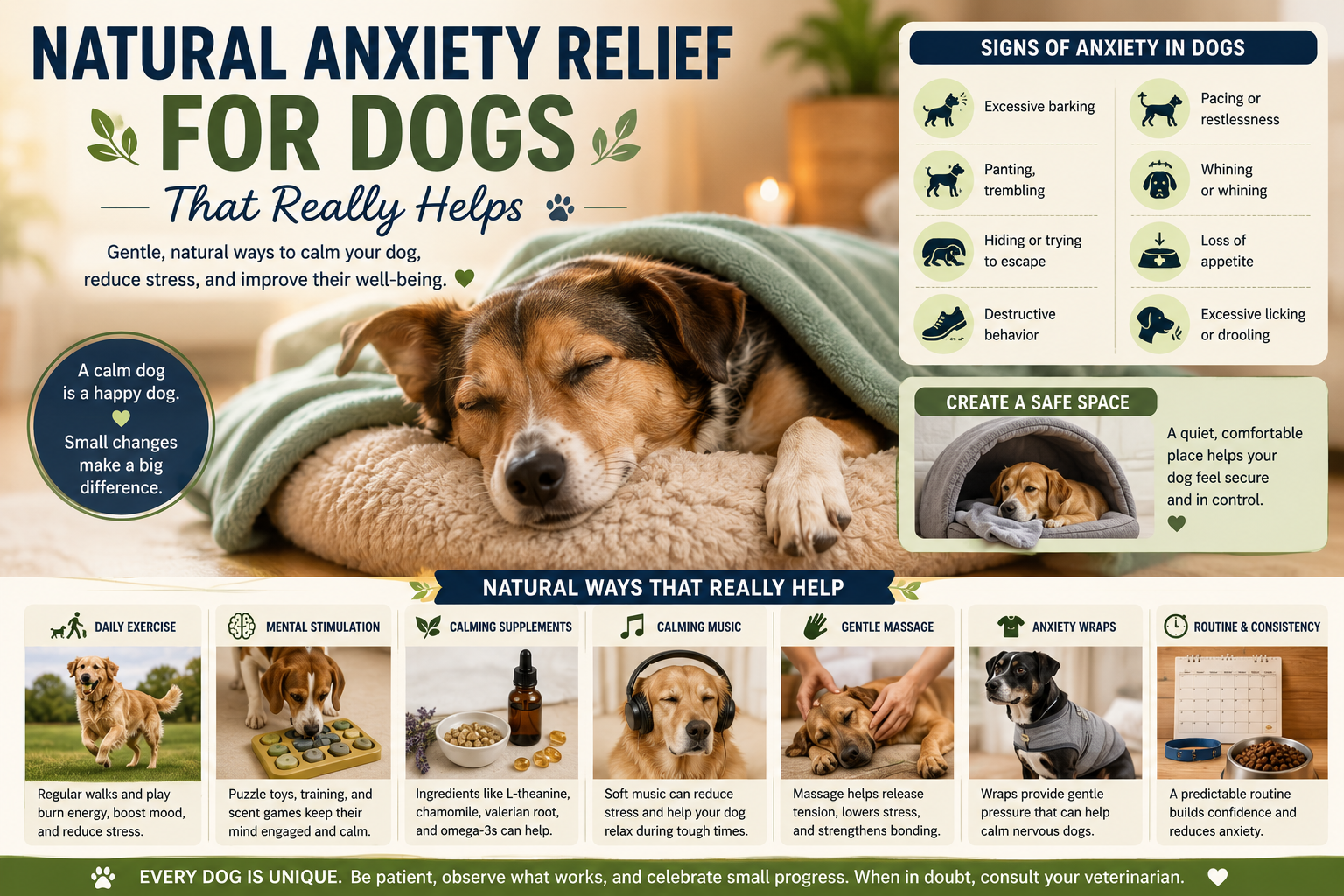
Natural Anxiety Relief for Dogs That Really Helps – Anxiety is one of the most common behavioral issues affecting dogs today. Just like humans, dogs can experience stress, fear, and nervousness in response to various situations. Loud noises, separation from family members, unfamiliar environments, travel, or changes in routine can all trigger anxiety. While occasional nervousness is normal, chronic anxiety can negatively affect a dog’s physical health, emotional well-being, and overall quality of life.
Fortunately, there are many natural approaches that can help anxious dogs feel calmer and more secure. These methods focus on reducing stress, creating positive experiences, and supporting emotional balance without relying solely on medication.
This guide explores effective strategies for Natural Anxiety Relief for Dogs, helping owners understand the causes of canine anxiety and the practical solutions that may provide lasting comfort.
Understanding Anxiety in Dogs
Anxiety is a state of fear, worry, or nervousness that occurs when a dog perceives a threat or stressful situation.
Common types of anxiety include:
- Separation anxiety
- Noise anxiety
- Travel anxiety
- Social anxiety
- Fear-based anxiety
- Generalized anxiety
Some dogs experience anxiety only occasionally, while others struggle with ongoing stress that interferes with daily life.
Recognizing the signs of anxiety is the first step toward finding effective Natural Anxiety Relief for Dogs.
Common Signs of Anxiety
Dogs express anxiety in different ways.
Typical symptoms include:
- Excessive barking
- Pacing
- Panting
- Trembling
- Hiding
- Whining
- Destructive behavior
- Excessive licking
- Drooling
- Restlessness
- Loss of appetite
- Clingy behavior
Some dogs may become withdrawn, while others become hyperactive when stressed.
Why Dogs Develop Anxiety
Several factors can contribute to anxiety.
Lack of Socialization
Dogs that were not properly socialized during puppyhood may become fearful of new people, animals, or environments.
Traumatic Experiences
Past negative experiences can create lasting fear responses.
Examples include:
- Abuse
- Neglect
- Accidents
- Shelter experiences
Changes in Routine
Dogs thrive on consistency.
Major changes such as moving, schedule changes, or the arrival of a new family member can trigger anxiety.
Genetics
Some breeds appear more prone to anxiety than others.
Aging
Senior dogs may develop anxiety due to cognitive decline or sensory changes.
Understanding the underlying cause helps determine the most effective approach for Natural Anxiety Relief for Dogs.
Create a Predictable Routine
One of the simplest ways to reduce anxiety is by maintaining a consistent daily routine.
Dogs feel more secure when they know what to expect.
Try to keep:
- Feeding times consistent
- Walk schedules predictable
- Bedtimes regular
- Training sessions structured
Routine helps create a sense of stability and safety.
For many dogs, consistency alone provides significant Natural Anxiety Relief for Dogs.
Daily Exercise Reduces Stress
Physical activity is one of the most effective natural anxiety reducers.
Exercise helps:
- Burn excess energy
- Release endorphins
- Improve mood
- Reduce boredom
- Promote relaxation
Depending on your dog’s age and health, activities may include:
- Daily walks
- Fetch
- Swimming
- Hiking
- Agility exercises
A tired dog is often a calmer dog.
Mental Stimulation Matters
Mental exercise is just as important as physical exercise.
Dogs that are mentally engaged tend to experience less stress and anxiety.
Activities may include:
- Puzzle toys
- Treat-dispensing toys
- Scent games
- Obedience training
- Interactive play
Mental enrichment is an often-overlooked form of Natural Anxiety Relief for Dogs.
Provide a Safe Space
Every dog benefits from having a designated safe area.
This space may be:
- A crate
- A quiet room
- A comfortable bed
- A covered den-like area
The goal is to create a location where your dog can retreat when feeling overwhelmed.
Never use this space as punishment.
Instead, encourage positive associations through treats, toys, and relaxation.
Use Positive Reinforcement Training
Training builds confidence.
Dogs that understand expectations often feel more secure and less anxious.
Positive reinforcement involves rewarding desired behaviors with:
- Treats
- Praise
- Toys
- Affection
Avoid punishment-based methods, which can increase fear and anxiety.
Confidence-building training is a highly effective form of Natural Anxiety Relief for Dogs.
Calming Music and Sound Therapy
Research suggests that certain types of music may help reduce stress in dogs.
Many owners find success with:
- Classical music
- Soft instrumental music
- Specialized dog-calming playlists
Background noise may also help mask triggering sounds such as:
- Thunderstorms
- Fireworks
- Traffic
Sound therapy can be particularly useful for dogs with noise sensitivity.
Natural Calming Supplements
Several natural supplements are commonly used to support relaxation.
Popular ingredients include:
L-Theanine
An amino acid known for promoting calmness.
Chamomile
Often used to encourage relaxation.
Valerian Root
A traditional herbal ingredient used for stress support.
Melatonin
Sometimes recommended for situational anxiety.
Magnesium
May support healthy nervous system function.
Always consult your veterinarian before introducing supplements, especially if your dog has existing health conditions.
Omega-3 Fatty Acids and Emotional Health
Omega-3 fatty acids are best known for supporting skin, coat, and joint health.
However, emerging research suggests they may also contribute to brain health and emotional wellness.
Sources include:
- Fish oil
- Salmon
- Sardines
Adding omega-3s may provide additional support as part of a broader Natural Anxiety Relief for Dogs plan.
Aromatherapy for Dogs
Some dog owners use pet-safe aromatherapy products to create a calming environment.
Common scents include:
- Lavender
- Chamomile
- Frankincense
However, not all essential oils are safe for dogs.
Only use products specifically formulated for pets and consult a veterinarian before introducing aromatherapy.
Calming Dog Beds
Comfort can influence emotional well-being.
Many dogs benefit from:
- Orthopedic beds
- Donut-shaped calming beds
- Plush sleeping areas
A comfortable resting place promotes relaxation and better sleep.
The Benefits of Massage
Gentle massage can help reduce tension and promote calm behavior.
Benefits may include:
- Muscle relaxation
- Reduced stress
- Improved bonding
- Enhanced comfort
Use slow, gentle strokes and observe your dog’s reaction.
Most dogs enjoy calm, reassuring physical contact.
Try Anxiety Wraps
Anxiety wraps apply gentle pressure around the body.
This pressure may create a calming effect similar to swaddling an infant.
Some dogs respond very well to anxiety wraps during:
- Thunderstorms
- Fireworks
- Travel
- Veterinary visits
Although results vary, many owners consider them a useful tool for Natural Anxiety Relief for Dogs.
Social Interaction and Confidence Building
Dogs are social animals.
Positive interactions with people and other dogs can improve confidence and reduce anxiety.
Activities may include:
- Structured playdates
- Group training classes
- Controlled socialization outings
Always proceed gradually and avoid overwhelming fearful dogs.
Address Separation Anxiety Naturally
Separation anxiety is one of the most common canine anxiety disorders.
Helpful strategies include:
Practice Short Departures
Leave for brief periods and gradually increase duration.
Avoid Dramatic Goodbyes
Keep departures and arrivals calm and low-key.
Provide Enrichment
Offer puzzle toys or treats before leaving.
Create Positive Associations
Help your dog associate alone time with enjoyable activities.
Consistent training often produces better long-term results than punishment.
Nutrition Can Influence Anxiety
Diet affects overall health, including emotional wellness.
A balanced diet supports:
- Brain function
- Energy levels
- Hormonal balance
- Nervous system health
Poor nutrition may contribute to behavioral challenges.
Choose high-quality food appropriate for your dog’s age, size, and activity level.
Avoid Reinforcing Fear
Many owners unintentionally reward anxious behavior.
For example, immediately comforting a fearful dog during every stressful situation may reinforce the fear response.
Instead:
- Stay calm
- Redirect attention
- Reward calm behavior
- Build confidence gradually
Helping dogs develop coping skills often leads to lasting improvement.
Senior Dogs and Anxiety
Older dogs frequently experience anxiety due to:
- Hearing loss
- Vision changes
- Cognitive decline
- Physical discomfort
Providing extra support, predictable routines, and comfortable environments can greatly improve quality of life.
Senior-specific approaches to Natural Anxiety Relief for Dogs often focus on reducing confusion and increasing security.
When to Seek Professional Help
While many natural strategies are effective, severe anxiety sometimes requires professional assistance.
Consult a veterinarian if your dog experiences:
- Extreme panic
- Self-injury
- Severe destruction
- Persistent anxiety
- Significant appetite changes
A veterinary behaviorist or qualified trainer can develop a personalized treatment plan.
In some cases, medication may be combined with natural approaches for optimal results.
Building a Long-Term Anxiety Management Plan
Successful anxiety management typically involves multiple strategies working together.
A comprehensive plan may include:
- Daily exercise
- Mental enrichment
- Positive reinforcement training
- Consistent routines
- Safe spaces
- Calming supplements
- Socialization opportunities
Consistency is key.
Many dogs show gradual improvement over weeks or months rather than overnight changes.
Signs Your Dog Is Becoming More Relaxed
Positive progress may include:
- Reduced pacing
- Less barking
- Improved appetite
- Better sleep
- Increased confidence
- More relaxed body language
- Improved focus during training
Tracking improvements can help you identify which strategies work best.
Final Thoughts
Finding effective Natural Anxiety Relief for Dogs often requires patience, observation, and a willingness to address the underlying causes of stress. Anxiety can affect dogs of all ages and breeds, but many cases can be improved through consistent routines, regular exercise, mental stimulation, confidence-building activities, and supportive environments.
The best Natural Anxiety Relief for Dogs usually combines multiple approaches tailored to the individual dog’s needs. Whether your pet struggles with separation anxiety, noise sensitivity, travel stress, or general nervousness, natural solutions can help create a calmer, happier, and more confident companion.
By understanding anxiety and taking proactive steps to support emotional wellness, you can help your dog enjoy a healthier and more relaxed life.
This content is sponsored by: https://ez96official.com/.