
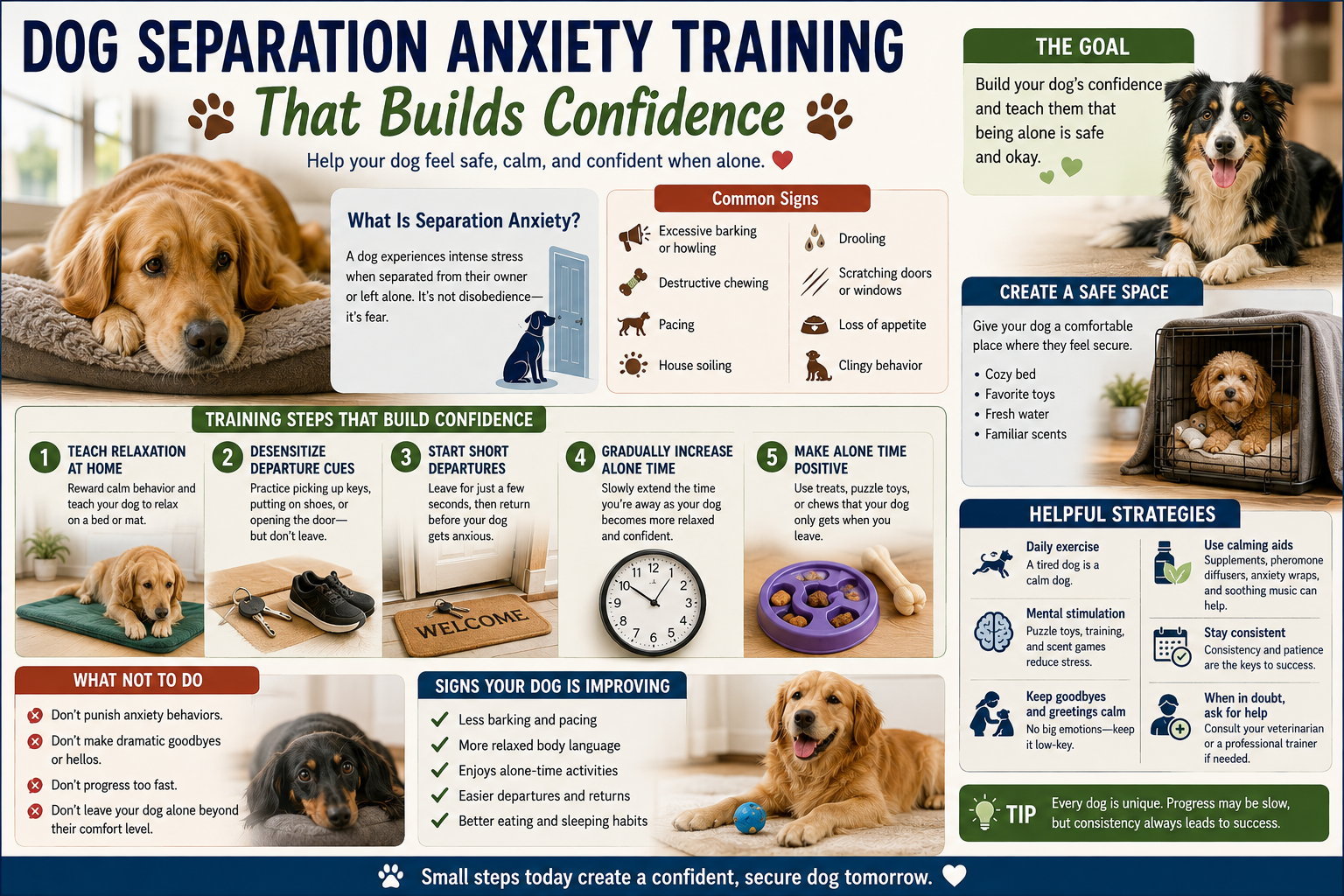
Dog Separation Anxiety Training That Builds Confidence – Separation anxiety is one of the most challenging behavioral issues dog owners face. Dogs are social animals that form strong bonds with their families, but when that attachment becomes excessive, being left alone can trigger intense stress and fear. Some dogs may bark nonstop, destroy household items, pace, drool excessively, or even injure themselves while trying to escape.
The good news is that separation anxiety can often be improved with patience, consistency, and the right training approach. Rather than simply trying to stop unwanted behaviors, effective Dog Separation Anxiety Training focuses on building confidence, teaching independence, and helping dogs feel secure when alone.
This guide explains the causes of separation anxiety, common symptoms, and proven training techniques that help dogs develop confidence and emotional resilience.
What Is Separation Anxiety in Dogs?
Separation anxiety occurs when a dog becomes distressed whenever separated from a person they are strongly attached to.
Unlike occasional loneliness or boredom, separation anxiety is a genuine emotional response that can cause significant stress.
Dogs with separation anxiety may panic when:
- Owners leave the house
- They are confined alone
- They lose access to a favorite person
- Daily routines suddenly change
Understanding the condition is the first step toward successful Dog Separation Anxiety Training.
Common Signs of Separation Anxiety
Many behaviors associated with separation anxiety occur only when the dog is left alone.
Common symptoms include:
- Excessive barking or howling
- Destructive chewing
- Scratching doors or windows
- House soiling despite being house-trained
- Pacing
- Excessive drooling
- Escape attempts
- Refusing food when alone
- Clingy behavior when owners are home
Some dogs begin showing anxiety before their owner even leaves, reacting to departure cues such as grabbing keys or putting on shoes.
Why Dogs Develop Separation Anxiety
There is rarely a single cause.
Several factors can contribute to the development of anxiety.
Sudden Changes in Routine
Dogs thrive on consistency.
Major life changes can trigger anxiety, including:
- Moving to a new home
- A change in work schedule
- Children leaving for college
- Retirement of an owner
- Adoption from a shelter
Lack of Independence Training
Some dogs never learn how to relax independently.
If a dog constantly follows family members and rarely spends time alone, separation can feel overwhelming.
Traumatic Experiences
Dogs that have experienced abandonment, neglect, or multiple rehomings may be more susceptible.
Genetic Predisposition
Some dogs appear naturally more sensitive and prone to anxiety than others.
Understanding the cause helps create a more effective Dog Separation Anxiety Training plan.
Why Punishment Does Not Work
Owners sometimes become frustrated when anxious dogs destroy furniture or bark excessively.
However, punishment is not an effective solution.
Anxiety-driven behaviors occur because the dog is afraid, not because they are being disobedient.
Punishment can:
- Increase fear
- Damage trust
- Worsen anxiety
- Create new behavioral problems
Successful Dog Separation Anxiety Training focuses on confidence-building rather than correction.
Building Confidence Through Independence
The ultimate goal is not simply teaching a dog to tolerate being alone.
The goal is helping the dog feel safe and confident when alone.
Confidence-building exercises create emotional resilience and reduce dependency.
Teach Your Dog to Relax Alone
Many owners unintentionally encourage constant attachment.
Begin teaching your dog that spending time alone is normal and safe.
Start Small
Encourage your dog to relax on a bed or mat while you remain in the room.
Reward calm behavior.
Gradually increase distance while maintaining a relaxed atmosphere.
Move Around the House
Practice walking into another room briefly.
Return before your dog becomes anxious.
Slowly increase duration over time.
These exercises form the foundation of effective Dog Separation Anxiety Training.
Create a Safe and Comfortable Space
Dogs often feel more secure when they have a designated area to relax.
This space may include:
- A comfortable bed
- Favorite toys
- Fresh water
- Familiar scents
Some dogs benefit from crates, while others prefer open rooms.
The key is finding an environment where your dog feels safe rather than confined.
Use Positive Associations
One of the most powerful training methods involves changing how your dog feels about being alone.
Create positive experiences associated with departures.
Examples include:
- Special treats available only when you leave
- Food puzzles
- Stuffed enrichment toys
- Long-lasting chews
Over time, your dog may begin associating alone time with enjoyable activities.
Practice Short Departures
Many owners accidentally move too quickly.
A dog that panics after ten minutes alone should not immediately be expected to stay alone for several hours.
Start With Seconds
Leave briefly and return before anxiety begins.
Examples:
- Step outside for 10 seconds
- Return calmly
- Repeat multiple times
Gradually increase duration.
Progress Slowly
Successful Dog Separation Anxiety Training often requires working below your dog’s anxiety threshold.
Small successes build confidence more effectively than long, stressful absences.
Desensitize Departure Cues
Many dogs become anxious before their owner even leaves.
Common triggers include:
- Picking up keys
- Putting on shoes
- Grabbing a bag
- Putting on a coat
Practice these actions without leaving.
For example:
- Pick up your keys
- Sit down and watch television
Repeat frequently until these cues lose their emotional impact.
Avoid Emotional Departures and Arrivals
Dramatic goodbyes may increase anxiety.
Instead:
- Stay calm before leaving
- Leave without lengthy farewells
- Return quietly
This helps normalize departures and arrivals.
Exercise Before Alone Time
Physical activity can significantly reduce stress.
Exercise helps:
- Burn excess energy
- Promote relaxation
- Improve mood
- Reduce boredom
Good options include:
- Walks
- Fetch
- Hiking
- Play sessions
A well-exercised dog is often more prepared for successful Dog Separation Anxiety Training.
Mental Stimulation Supports Emotional Health
Mental enrichment can be just as important as physical exercise.
Consider:
- Puzzle toys
- Scent games
- Food-dispensing toys
- Obedience training
Mental stimulation helps reduce boredom and promotes relaxation.
Teach a Settle Command
A settle cue teaches your dog how to relax on command.
How to Teach It
- Reward calm lying behavior.
- Introduce a cue such as “settle.”
- Continue rewarding relaxation.
- Gradually increase duration.
Over time, dogs learn that calm behavior is rewarding.
Build Independence During Daily Life
Many dogs with separation anxiety struggle because they depend heavily on constant interaction.
Encourage healthy independence.
Examples include:
- Independent play
- Relaxing on a nearby bed
- Spending short periods in another room
These small exercises contribute greatly to long-term confidence.
Avoid Making the Dog Your Shadow
If your dog follows you everywhere:
- Occasionally close doors between rooms
- Encourage resting independently
- Reward calm separation
This helps prevent overdependence.
Consider Background Sound
Soft music or white noise may help some dogs relax.
Many owners report success with:
- Classical music
- Calming instrumental playlists
- White noise machines
Background sounds can mask environmental triggers.
Address Boredom Separately
Not every dog that misbehaves when alone has separation anxiety.
Some dogs simply need:
- More exercise
- More enrichment
- More mental stimulation
Accurate identification of the problem improves training outcomes.
Training Puppies to Prevent Separation Anxiety
Prevention is often easier than treatment.
Puppies benefit from learning independence early.
Helpful strategies include:
- Short periods alone each day
- Independent play sessions
- Crate training when appropriate
- Positive alone-time experiences
Early confidence-building reduces the risk of future anxiety.
Senior Dogs and Separation Anxiety
Older dogs sometimes develop anxiety later in life.
Possible causes include:
- Cognitive decline
- Hearing loss
- Vision impairment
- Physical discomfort
Senior dogs may require modified training approaches and veterinary evaluation.
Natural Calming Aids
Some dogs benefit from additional support during training.
Options may include:
- Calming supplements
- Anxiety wraps
- Pheromone diffusers
- Orthopedic beds
- Calming music
These tools are most effective when combined with a structured Dog Separation Anxiety Training program.
Common Mistakes Owners Make
Avoid these common errors:
Moving Too Fast
Progressing too quickly often causes setbacks.
Inconsistent Training
Dogs learn best through repetition and consistency.
Punishing Anxiety Behaviors
Punishment increases fear and stress.
Ignoring Exercise Needs
Physical and mental activity are essential components of anxiety management.
Leaving Dogs Alone Beyond Their Comfort Level
Repeated panic episodes can slow progress.
When Professional Help Is Needed
Some dogs experience severe separation anxiety that requires additional support.
Consult a veterinarian or certified behavior professional if your dog:
- Injures themselves
- Experiences panic attacks
- Causes extensive destruction
- Shows little improvement
- Develops worsening symptoms
Professional guidance can significantly improve results.
How Long Does Training Take?
Every dog progresses differently.
Factors influencing success include:
- Severity of anxiety
- Consistency of training
- Individual temperament
- Underlying causes
Some dogs improve within weeks, while others may require several months of structured work.
Patience is essential.
Signs Your Dog Is Gaining Confidence
Positive improvements may include:
- Less barking when alone
- Reduced pacing
- Increased relaxation
- Better focus on enrichment toys
- Less clingy behavior
- More independent resting
These signs indicate that your Dog Separation Anxiety Training efforts are helping.
Creating a Long-Term Success Plan
Successful anxiety management is usually ongoing.
Maintain:
- Consistent routines
- Regular exercise
- Mental enrichment
- Positive reinforcement
- Independent relaxation opportunities
These habits continue supporting confidence long after training goals are achieved.
Final Thoughts
Effective Dog Separation Anxiety Training is about much more than preventing barking or destructive behavior. The true goal is helping dogs feel safe, confident, and emotionally secure when left alone. By gradually teaching independence, creating positive associations with alone time, providing physical and mental enrichment, and progressing at a pace your dog can handle, you can build lasting confidence and reduce anxiety.
While improvement may take time, consistent training can transform a fearful, dependent dog into a more relaxed and self-assured companion. With patience, understanding, and the right approach, most dogs can learn that being alone is not something to fear, but simply another normal part of daily life.