
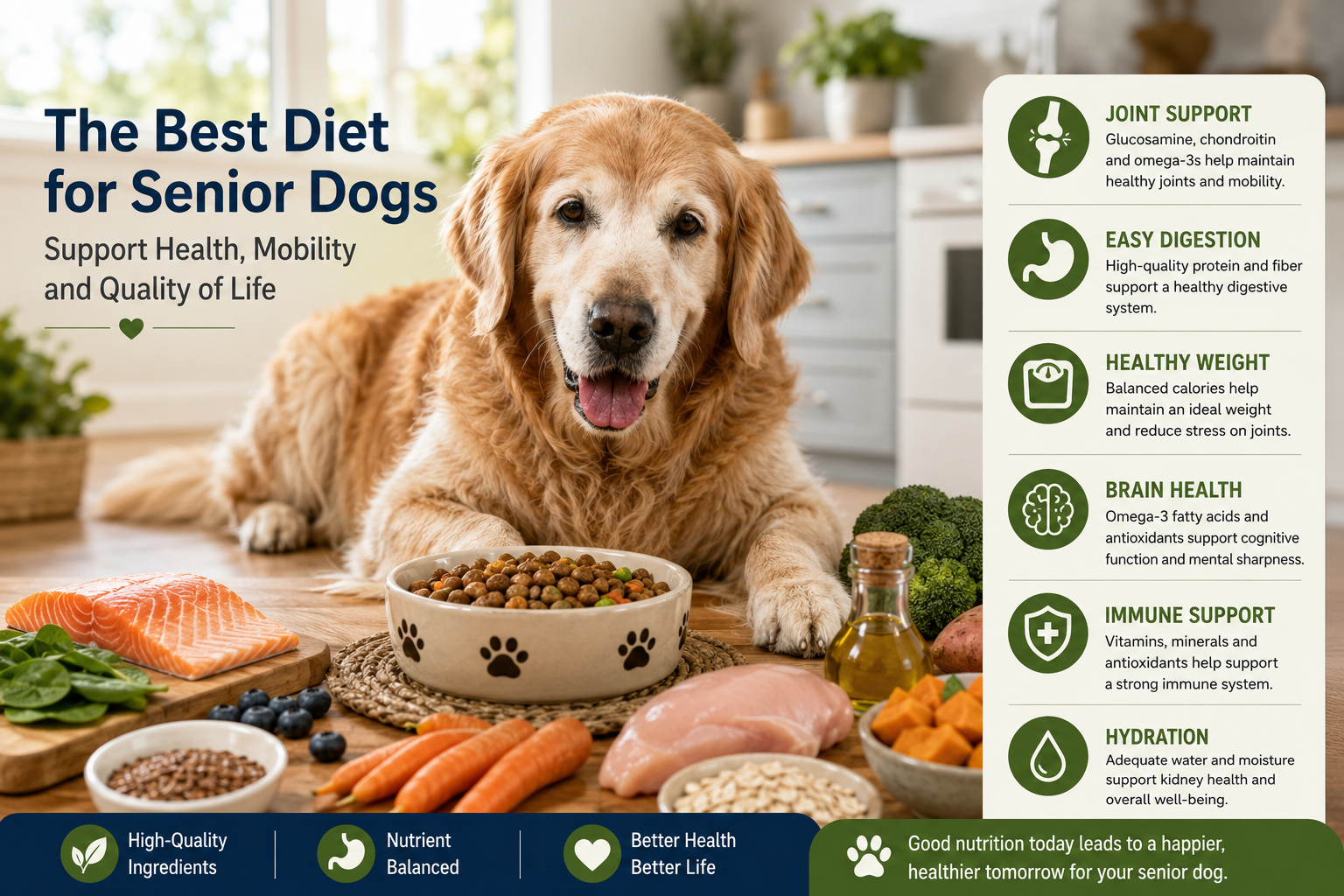
Best Diet for Senior Dogs to Support Healthy Aging – As dogs grow older, their nutritional needs change significantly. The energetic puppy years eventually give way to a slower pace, and senior dogs require a diet specifically designed to support aging bodies. Proper nutrition can help maintain a healthy weight, preserve muscle mass, support joint function, improve digestion, and contribute to a better quality of life.
Many pet owners assume that feeding the same food throughout a dog’s life is sufficient. However, senior dogs often benefit from adjustments in calories, protein, fat, fiber, and other nutrients. Choosing the best diet for senior dogs is one of the most important steps you can take to help your aging companion stay healthy and active.
This guide explores the nutritional needs of senior dogs, key ingredients to look for, common feeding mistakes, and practical tips for supporting healthy aging through diet.
When Is a Dog Considered a Senior?
The age at which a dog becomes a senior varies depending on breed and size.
Generally:
- Small breeds: around 10–12 years
- Medium breeds: around 8–10 years
- Large breeds: around 7–8 years
- Giant breeds: around 5–7 years
Larger dogs tend to age more quickly than smaller breeds. Regardless of age, changes in energy levels, mobility, body condition, and overall health often indicate that dietary adjustments may be beneficial.
Why Senior Dogs Need a Different Diet
As dogs age, several physiological changes can affect their nutritional requirements.
These changes may include:
- Slower metabolism
- Reduced activity levels
- Loss of muscle mass
- Changes in digestion
- Decreased immune function
- Joint wear and tear
- Dental issues
- Increased risk of chronic disease
A senior-specific diet aims to address these changes while supporting long-term wellness.
Key Nutritional Goals for Senior Dogs
The best senior dog diet should focus on several important goals:
Maintaining a Healthy Weight
Obesity is one of the most common health issues affecting older dogs.
Excess weight can contribute to:
- Joint stress
- Arthritis
- Heart problems
- Diabetes
- Reduced mobility
Senior diets often contain carefully balanced calorie levels to help maintain an ideal body condition.
Preserving Muscle Mass
Aging dogs naturally lose lean muscle over time.
Adequate protein intake helps:
- Support muscle maintenance
- Improve strength
- Promote mobility
- Support immune health
Contrary to outdated beliefs, many healthy senior dogs benefit from high-quality protein rather than reduced protein levels.
Supporting Joint Health
Joint stiffness and arthritis become more common with age.
Nutrition can help support:
- Cartilage health
- Mobility
- Comfort during movement
Many senior diets include ingredients specifically chosen for joint support.
Supporting Cognitive Function
Brain health becomes increasingly important as dogs age.
Certain nutrients may help support:
- Memory
- Learning ability
- Mental alertness
- Cognitive function
Essential Nutrients for Healthy Aging
High-Quality Protein
Protein remains one of the most important nutrients for senior dogs.
Good protein sources include:
- Chicken
- Turkey
- Beef
- Lamb
- Fish
- Eggs
Protein supports muscle maintenance and overall body function.
When selecting a senior dog food, look for named animal proteins listed among the primary ingredients.
Omega-3 Fatty Acids
Omega-3 fatty acids are commonly sourced from fish oil.
Benefits may include support for:
- Joint health
- Brain function
- Skin and coat condition
- Heart health
DHA and EPA are particularly valuable forms of omega-3s.
Fiber
Many senior dogs benefit from moderate fiber levels.
Fiber can help:
- Support digestive health
- Improve stool quality
- Promote satiety
- Assist weight management
Common fiber sources include:
- Pumpkin
- Sweet potatoes
- Beet pulp
- Oats
Antioxidants
Antioxidants help combat oxidative stress associated with aging.
Examples include:
- Vitamin E
- Vitamin C
- Selenium
- Beta-carotene
These nutrients support overall wellness and immune function.
Glucosamine and Chondroitin
Many senior dog foods contain glucosamine and chondroitin to support joint health.
These ingredients are frequently included in diets designed for aging dogs with mobility concerns.
The Importance of Hydration
Hydration becomes increasingly important as dogs age.
Senior dogs may be more susceptible to dehydration due to:
- Reduced thirst response
- Medical conditions
- Certain medications
Encourage water intake by:
- Providing fresh water at all times
- Offering wet food when appropriate
- Adding water or broth to meals
Proper hydration supports kidney function and overall health.
Choosing the Right Type of Food
Dry Food
Dry kibble remains a popular choice.
Benefits include:
- Convenience
- Easy storage
- Cost-effectiveness
Many premium senior formulas are available in dry form.
Wet Food
Wet food may be especially helpful for older dogs.
Benefits include:
- Increased moisture
- Easier chewing
- Enhanced flavor
Dogs with dental issues often find wet food easier to consume.
Fresh Food
Fresh and gently cooked diets have gained popularity in recent years.
Potential benefits include:
- High palatability
- Fresh ingredients
- Minimal processing
- Customized nutrition
However, these diets are generally more expensive.
Weight Management for Senior Dogs
Weight control is one of the most important aspects of senior nutrition.
Underweight Dogs
Some senior dogs lose weight due to:
- Dental problems
- Reduced appetite
- Chronic illness
These dogs may require:
- Calorie-dense foods
- Frequent small meals
- Veterinary evaluation
Overweight Dogs
Other seniors become less active and gain excess weight.
Weight management strategies include:
- Portion control
- Regular exercise
- Lower-calorie foods
- Monitoring treats
Maintaining an ideal weight can significantly improve mobility and longevity.
Joint-Friendly Nutrition
Joint health is a major concern for aging dogs.
Helpful nutrients include:
Fish Oil
Provides omega-3 fatty acids that support joint comfort.
Glucosamine
Supports cartilage maintenance.
Chondroitin
Helps maintain joint structure.
Green-Lipped Mussel
Often included in advanced joint-support formulas.
Combining nutritional support with regular low-impact exercise can help maintain mobility.
Supporting Digestive Health
Digestive changes become more common with age.
Some senior dogs experience:
- Sensitive stomachs
- Constipation
- Reduced nutrient absorption
Beneficial dietary components include:
Probiotics
Support healthy gut bacteria.
Prebiotics
Provide nourishment for beneficial microbes.
Easily Digestible Ingredients
High-quality ingredients help improve nutrient utilization.
A healthy digestive system contributes to overall wellness and energy levels.
Foods and Ingredients to Avoid
Not all foods are suitable for senior dogs.
Limit or avoid:
Excess Calories
Overfeeding can lead to obesity.
Low-Quality Fillers
Choose foods with clearly identified ingredients.
Excessive Fat
Some dogs may struggle with high-fat diets.
Unsafe Human Foods
Avoid:
- Chocolate
- Grapes
- Raisins
- Onions
- Garlic
- Xylitol
Always verify food safety before sharing table scraps.
Common Health Conditions and Diet
Arthritis
Joint-support nutrients and weight management are particularly important.
Kidney Disease
Special veterinary diets may be necessary.
Heart Disease
Reduced sodium levels may be recommended.
Diabetes
Consistent feeding schedules and controlled carbohydrates often help manage blood sugar.
Consult your veterinarian when chronic health conditions are present.
Feeding Tips for Senior Dogs
Feed Consistent Meals
Regular feeding schedules support digestion and appetite.
Monitor Weight Regularly
Monthly weight checks can help identify problems early.
Adjust Portions as Needed
Calorie requirements often change with age.
Make Food Easy to Eat
Softened kibble or wet food may help dogs with dental challenges.
Introduce Dietary Changes Gradually
Transition slowly over 7–10 days to minimize digestive upset.
Signs Your Senior Dog Is Thriving
A well-balanced senior diet should support:
- Stable body weight
- Healthy muscle tone
- Good mobility
- Strong appetite
- Consistent digestion
- Bright eyes
- Healthy skin and coat
These indicators suggest that nutritional needs are being met effectively.
The Role of Veterinary Guidance
Every dog ages differently.
Factors such as:
- Breed
- Activity level
- Medical history
- Current health status
can influence nutritional requirements.
Routine veterinary visits help ensure dietary choices remain appropriate as your dog ages.
A veterinarian can recommend:
- Suitable diets
- Portion sizes
- Supplements
- Weight management plans
based on your dog’s specific needs.
Emerging Trends in Senior Dog Nutrition
Pet nutrition continues to evolve.
Popular trends in 2026 include:
Fresh Senior Dog Foods
Fresh meal services tailored to aging dogs.
Functional Ingredients
Ingredients targeting specific health concerns such as joints, digestion, and cognition.
Personalized Nutrition
Customized meal plans based on individual health data.
Gut Health Support
Increased use of probiotics and microbiome-focused nutrition.
These innovations reflect growing interest in proactive senior pet care.
Final Thoughts
Providing the best diet for senior dogs is one of the most effective ways to support healthy aging. As dogs grow older, their nutritional needs change, making it essential to choose foods that promote healthy weight management, muscle maintenance, joint support, digestive health, and cognitive function.
High-quality protein, omega-3 fatty acids, antioxidants, fiber, and joint-support nutrients can all play important roles in maintaining your dog’s quality of life. Combined with regular exercise, proper hydration, and routine veterinary care, a balanced senior diet can help your companion remain active, comfortable, and happy throughout their golden years.
Every senior dog is unique, so pay attention to your pet’s individual needs and work closely with your veterinarian to create the best nutrition plan. With the right dietary support, many dogs can continue enjoying a vibrant and fulfilling life well into old age.