Dog Dental Care at Home for Better Oral Health – Many dog owners focus on nutrition, exercise, grooming, and routine veterinary visits, but dental care is often overlooked. Unfortunately, oral health is one of the most important aspects of a dog’s overall well-being. Poor dental hygiene can lead to bad breath, painful gum disease, tooth loss, and even health problems affecting other parts of the body.
The good news is that many dental issues can be prevented through consistent home care. By establishing a simple dental routine, dog owners can help maintain healthy teeth and gums while reducing the risk of costly veterinary treatments later in life.
This guide explains why dental care matters, common dental problems in dogs, and the best ways to support your dog’s oral health from the comfort of home.
Why Dental Health Matters for Dogs
A dog’s mouth contains bacteria just like a human’s mouth. Without regular cleaning, plaque begins to accumulate on the teeth.
Plaque is a sticky film made up of bacteria, food particles, and saliva. Over time, plaque hardens into tartar, which is much more difficult to remove.
When tartar builds up, it can lead to:
- Bad breath
- Gum inflammation
- Painful infections
- Tooth decay
- Tooth loss
- Difficulty eating
More importantly, advanced dental disease may allow bacteria to enter the bloodstream, potentially affecting the heart, liver, and kidneys.
Maintaining oral health is therefore an important part of supporting your dog’s overall health and longevity.
Understanding Periodontal Disease
Periodontal disease is one of the most common health conditions in adult dogs.
It develops gradually in several stages.
Stage 1: Plaque Formation
Bacteria accumulate on the teeth and form plaque.
Stage 2: Tartar Buildup
Plaque hardens into tartar if not removed regularly.
Stage 3: Gingivitis
The gums become inflamed and may appear red or swollen.
Stage 4: Advanced Periodontal Disease
Infections can damage gums, bone, and supporting structures around the teeth.
Early prevention is much easier than treating advanced dental disease.
Signs Your Dog May Have Dental Problems
Recognizing dental issues early can prevent serious complications.
Common warning signs include:
- Bad breath
- Yellow or brown tartar buildup
- Red or swollen gums
- Bleeding gums
- Loose teeth
- Excessive drooling
- Difficulty chewing
- Reduced appetite
- Pawing at the mouth
- Facial swelling
If you notice any of these dog dental care symptoms, consult your veterinarian promptly.
The Benefits of Home Dental Care
A consistent oral care routine offers numerous benefits.
These include:
- Fresher breath
- Healthier gums
- Reduced plaque buildup
- Lower risk of tooth loss
- Improved comfort while eating
- Reduced veterinary dental costs
- Better overall health
Even a few minutes of care each day can make a significant difference.
Brushing Your Dog’s Teeth
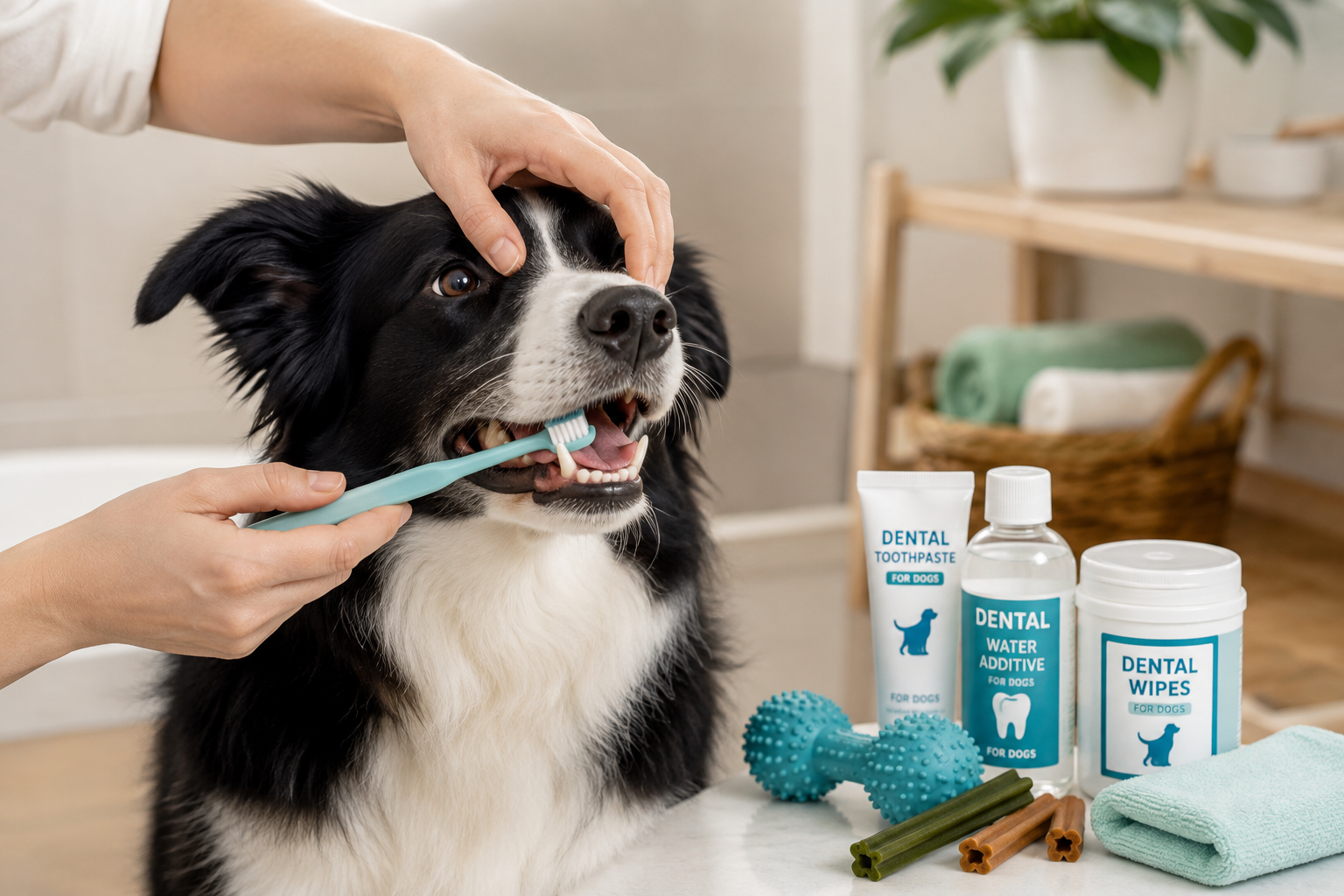
Brushing remains the gold standard of home dental care.
Just as humans brush daily, dogs benefit from regular tooth brushing.
Choosing the Right Toothbrush
Several options are available:
- Dog toothbrushes
- Finger brushes
- Soft-bristle brushes
Select a brush that comfortably fits your dog’s mouth size.
Use Dog-Specific Toothpaste
Never use human toothpaste.
Human products often contain ingredients that can be harmful if swallowed.
Dog dental care toothpastes are formulated to be safe and come in flavors such as:
- Chicken
- Peanut butter
- Beef
- Poultry
These flavors often make brushing easier.
How to Introduce Tooth Brushing
Start gradually.
- Allow your dog to taste the toothpaste.
- Gently touch the gums and teeth.
- Introduce the toothbrush slowly.
- Brush for short periods initially.
- Reward cooperation with praise or treats.
Patience helps create a positive experience.
How Often Should You Brush?
Daily brushing provides the greatest benefits.
However, even brushing several times per week can significantly reduce plaque accumulation.
Consistency is more important than perfection.
A regular routine helps prevent dental problems before they develop.
Dental Chews and Treats
Dental chews can complement brushing by helping reduce plaque and tartar buildup.
Many products are specifically designed to:
- Scrape plaque from teeth
- Stimulate gums
- Promote chewing activity
- Freshen breath
When selecting dental chews:
- Choose products appropriate for your dog’s size
- Supervise chewing sessions
- Follow feeding recommendations
Dental chews should not replace brushing but can be a useful addition to an oral care routine.
Dental Toys
Certain chew toys help support oral health.
Examples include:
Rubber Chew Toys
These can gently massage gums and encourage chewing.
Textured Dental Toys
Special surfaces help clean teeth during use.
Rope Toys
Some dogs enjoy rope toys that provide mild cleaning action while chewing.
Always inspect toys regularly and replace damaged items.
Water Additives
Dental water additives have become increasingly popular.
These products are added to drinking water and may help:
- Reduce oral bacteria
- Improve breath odor
- Support overall oral hygiene
While they are not a substitute for brushing, they can provide additional support.
Dental Wipes
Some dogs strongly resist tooth brushing.
Dental wipes offer an alternative option.
Owners can gently wipe the teeth and gumline to help remove plaque and bacteria.
Although less effective than brushing, dental wipes are often better than no dental care at all.
The Role of Diet in Oral Health
Nutrition plays an important role in maintaining healthy teeth and gums.
Dental Diets
Certain veterinary diets are specifically designed to support oral health.
These foods may:
- Reduce plaque accumulation
- Promote chewing
- Improve dental hygiene
Balanced Nutrition
A healthy diet supports:
- Strong teeth
- Healthy gums
- Immune function
Providing complete and balanced nutrition benefits oral health as well as overall wellness.
Monitoring Your Dog’s Mouth at Home
Regularly examining your dog’s mouth can help identify problems early.
Check for:
- Tartar buildup
- Gum redness
- Broken teeth
- Swelling
- Unusual odors
Monthly oral examinations can help you detect changes before they become serious.
Common Dental Problems in Dogs
Gingivitis
Gingivitis is inflammation of the gums.
Signs include:
- Redness
- Swelling
- Bleeding
Early treatment often prevents progression.
Tooth Fractures
Dogs sometimes crack or break teeth by chewing hard objects.
Damaged teeth may cause:
- Pain
- Infection
- Difficulty eating
Periodontal Disease
Advanced gum disease can lead to:
- Tooth loss
- Bone damage
- Chronic pain
Oral Infections
Untreated dental disease can result in bacterial infections requiring veterinary treatment.
Foods and Items to Avoid
Certain objects may damage teeth.
Avoid allowing your dog to chew on:
- Rocks
- Antlers
- Hard bones
- Metal objects
- Extremely hard chew products
If an item is harder than the dog’s teeth, it may increase the risk of fractures.
Senior Dogs and Dental Care
Dental care becomes even more important as dogs age.
Senior dogs are more likely to experience:
- Tartar accumulation
- Tooth loss
- Gum disease
- Oral discomfort
Maintaining a consistent dental routine can improve comfort and quality of life for older dogs.
Soft toothbrushes, dental wipes, and regular monitoring may be particularly helpful for aging pets.
Puppies Need Dental Care Too
Dental care should begin early.
Introducing oral hygiene during puppyhood helps dogs become comfortable with handling and brushing.
Benefits include:
- Easier lifelong dental care
- Positive associations with brushing
- Early detection of dental abnormalities
Starting young often makes future dental maintenance much easier.
Professional Dental Cleanings
Even with excellent home care, many dogs eventually require professional dental cleanings.
Veterinary cleanings allow for:
- Thorough tartar removal
- Dental examinations
- Treatment of hidden problems
- Assessment below the gumline
Your veterinarian can recommend an appropriate cleaning schedule based on your dog’s age, breed, and oral health status.
Building a Dental Care Routine
A successful home dental plan may include:
Daily
- Tooth brushing
- Quick mouth check
Weekly
- Dental chews
- Inspection of gums and teeth
Monthly
- Thorough oral examination
Annually
- Veterinary dental assessment
Small, consistent efforts often provide the greatest long-term benefits.
Common Mistakes to Avoid
Waiting Until Problems Develop
Preventive care is far more effective than treatment.
Using Human Toothpaste
Only use products formulated for dogs.
Ignoring Bad Breath
Persistent bad breath may indicate dental disease.
Skipping Veterinary Exams
Home care should complement—not replace—professional evaluations.
The Connection Between Oral Health and Overall Health
Research increasingly shows that oral health affects the entire body.
Chronic dental disease may contribute to systemic health concerns involving:
- Heart health
- Kidney function
- Liver health
- Immune system function
Maintaining healthy teeth and gums is therefore an important investment in your dog’s overall well-being.
Final Thoughts
Dog dental care at home is one of the most effective ways to support your pet’s long-term health. By brushing regularly, providing dental-friendly products, monitoring oral health, and working closely with your veterinarian, you can help prevent many common dental problems before they become serious.
A healthy mouth contributes to fresher breath, comfortable eating, improved quality of life, and better overall wellness. Whether you have a playful puppy, an active adult dog, or a beloved senior companion, consistent dental care can make a meaningful difference throughout every stage of life.
The best dental routine is the one you can maintain consistently. Even small daily efforts can help keep your dog’s teeth and gums healthy for years to come.