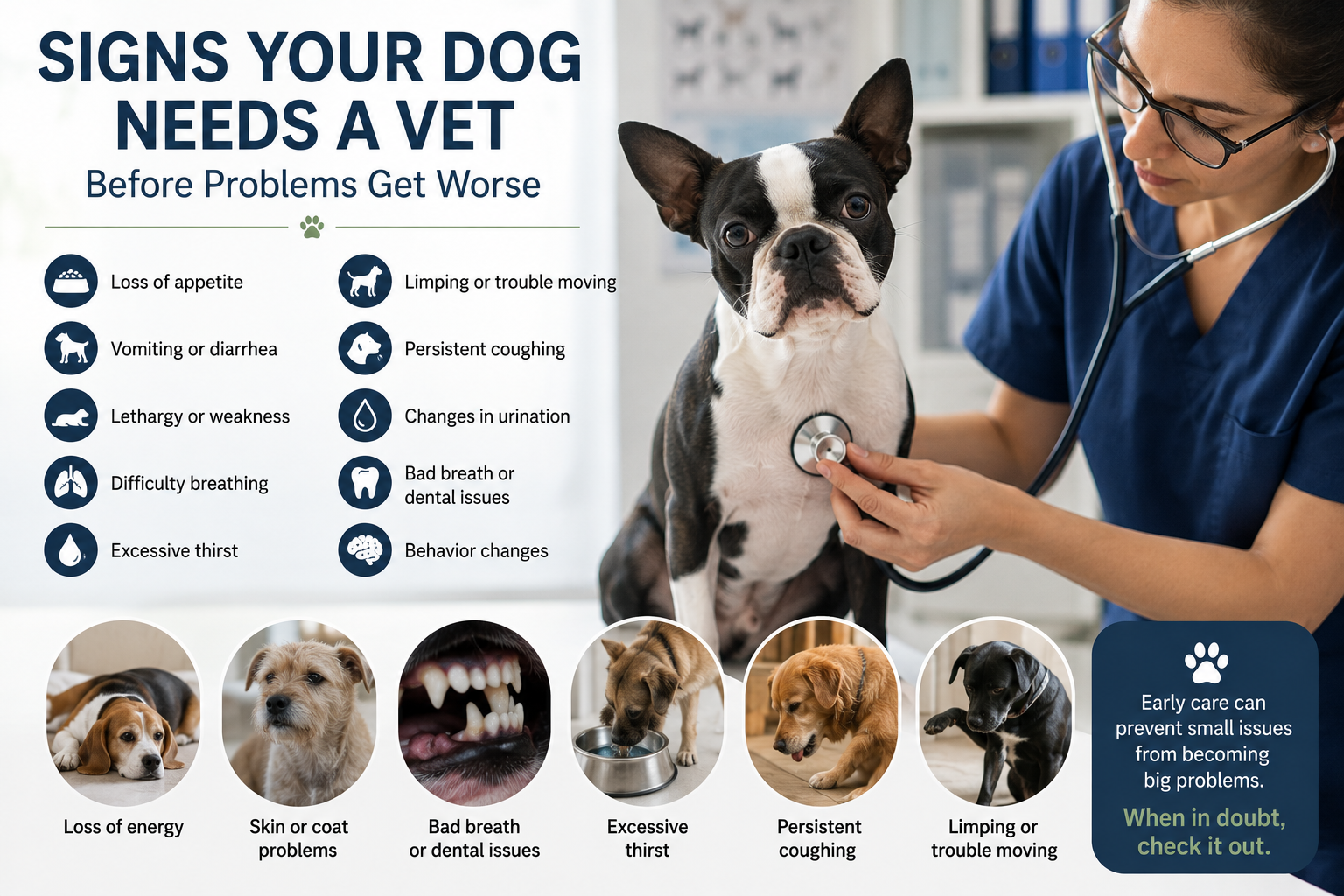
Signs Your Dog Needs a Vet Before Problems Get Worse – Dogs are remarkably good at hiding pain and discomfort. This instinct comes from their ancestors, who often concealed weakness to avoid becoming vulnerable. Because of this natural behavior, many health issues can develop quietly before owners notice obvious symptoms.
Understanding the Signs Your Dog Needs a Vet can help you identify potential health problems early and seek treatment before they become serious. While not every symptom requires emergency care, recognizing warning signs can make a significant difference in your dog’s recovery, comfort, and overall well-being.
This guide explores the most important Signs Your Dog Needs a Vet and explains when professional medical attention may be necessary.
Why Early Veterinary Care Matters
Learning the Signs Your Dog Needs a Vet is one of the most important responsibilities of dog ownership. Early diagnosis often allows veterinarians to treat conditions before they progress into more serious and costly health problems.
Prompt veterinary care can help:
- Prevent minor illnesses from worsening
- Reduce pain and discomfort
- Improve treatment outcomes
- Lower long-term medical expenses
- Increase quality of life
Regularly observing your dog’s behavior, eating habits, and physical condition can help you recognize changes before they become severe.
Changes in Appetite
A healthy dog usually maintains a consistent appetite. Sudden changes in eating habits can indicate underlying health concerns.
Loss of Appetite
If your dog refuses food or eats significantly less than usual, possible causes may include:
- Dental disease
- Digestive disorders
- Infections
- Pain
- Liver or kidney problems
While missing a single meal is not always alarming, appetite loss lasting more than 24 hours should be evaluated by a veterinarian.
Increased Appetite
An unusually strong appetite may also signal a medical condition.
Potential causes include:
- Diabetes
- Hormonal disorders
- Medication side effects
- Metabolic diseases
Changes in appetite are among the most common Signs Your Dog Needs a Vet, particularly when they occur suddenly or persist for several days.
Excessive Thirst
Many owners overlook changes in water consumption.
Dogs that begin drinking significantly more water than normal may have:
- Diabetes
- Kidney disease
- Liver disease
- Hormonal imbalances
- Urinary tract problems
Monitoring daily water intake can help you detect health issues early.
Vomiting and Diarrhea
Occasional stomach upset can happen after dietary indiscretion or mild digestive irritation.
However, veterinary attention is recommended if:
- Vomiting continues for more than a day
- Diarrhea persists beyond 24 hours
- Blood appears in vomit or stool
- Symptoms occur repeatedly
- Signs of dehydration develop
Persistent digestive issues are important Signs Your Dog Needs a Vet because dehydration and underlying illnesses can worsen quickly without treatment.
Unexplained Weight Loss
Gradual or sudden weight loss should never be ignored.
Possible causes include:
- Digestive disorders
- Internal parasites
- Diabetes
- Cancer
- Kidney disease
- Dental problems
Weight loss may occur even when a dog appears to be eating normally. Routine weight monitoring can help identify health concerns before they become severe.
Lethargy and Low Energy
Dogs naturally experience occasional tired days, but persistent lethargy deserves attention.
Warning signs include:
- Sleeping more than usual
- Reduced interest in walks
- Lack of enthusiasm for play
- General weakness
Low energy levels can indicate infections, pain, heart disease, metabolic disorders, or other medical conditions.
Difficulty Breathing
Breathing problems should always be treated seriously.
Seek veterinary care if your dog experiences:
- Rapid breathing
- Labored breathing
- Wheezing
- Persistent coughing
- Pale or blue gums
- Open-mouth breathing while resting
Respiratory issues may involve the lungs, heart, or airways. Breathing difficulties are among the most serious Signs Your Dog Needs a Vet and may require immediate attention.
Persistent Coughing
An occasional cough may not be concerning, but chronic coughing should be evaluated.
Possible causes include:
- Respiratory infections
- Heart disease
- Allergies
- Chronic bronchitis
- Airway disorders
A veterinarian can determine the cause and recommend appropriate treatment.
Changes in Urination
Urinary habits often provide valuable clues about a dog’s health.
Contact your veterinarian if you notice:
Frequent Urination
This may indicate:
- Urinary tract infections
- Diabetes
- Kidney disease
Difficulty Urinating
Straining or inability to urinate can become a medical emergency.
Blood in the Urine
Blood should always be investigated promptly.
Urinary issues often worsen quickly if left untreated.
Changes in Bowel Movements
Healthy dogs typically have consistent bowel habits.
Warning signs include:
- Persistent diarrhea
- Constipation
- Blood in stool
- Black or tarry stools
- Excessive mucus
Digestive changes may indicate infections, parasites, food intolerance, or more serious medical conditions.
Bad Breath Beyond Normal Dog Breath
Dogs naturally have some breath odor, but unusually foul breath may indicate health problems.
Common causes include:
- Dental disease
- Oral infections
- Broken teeth
- Kidney disease
Persistent bad breath should never be dismissed as normal.
Dental Problems
Oral health plays a major role in overall wellness.
Signs of dental disease include:
- Swollen gums
- Red gums
- Excessive drooling
- Difficulty chewing
- Tooth discoloration
- Loose teeth
Early treatment can prevent pain and more serious complications.
Mobility Problems
Changes in movement often signal discomfort or injury.
Watch for:
- Limping
- Stiffness
- Difficulty standing
- Reluctance to jump
- Trouble climbing stairs
Possible causes include:
- Arthritis
- Joint disease
- Ligament injuries
- Neurological disorders
Limping, stiffness, and reduced mobility are common Signs Your Dog Needs a Vet, especially in older dogs.
Skin and Coat Changes
The skin often reflects overall health.
Potential warning signs include:
- Excessive itching
- Hair loss
- Redness
- Hot spots
- Scabs
- Recurrent skin infections
Skin conditions may be caused by allergies, parasites, infections, or underlying diseases.
Ear Problems
Ear infections are common among dogs.
Symptoms may include:
- Head shaking
- Scratching at the ears
- Redness
- Odor
- Discharge
- Pain when touched
Untreated ear infections can become severe and affect your dog’s comfort and hearing.
Eye Changes
Healthy eyes should appear bright and clear.
Seek veterinary attention if you notice:
- Redness
- Cloudiness
- Excessive tearing
- Swelling
- Squinting
- Eye discharge
Eye conditions can progress rapidly and should be evaluated promptly.
Behavioral Changes
Behavioral changes often provide important clues about health problems.
Watch for:
- Irritability
- Aggression
- Withdrawal
- Anxiety
- Confusion
- Increased clinginess
Pain, illness, neurological conditions, and age-related cognitive decline can all affect behavior.
Sudden personality changes can be subtle Signs Your Dog Needs a Vet, particularly when they occur without an obvious explanation.
Excessive Scratching or Licking
Occasional scratching is normal, but excessive licking or scratching may indicate a problem.
Potential causes include:
- Allergies
- Parasites
- Skin infections
- Anxiety
- Pain
Persistent licking can create additional skin damage and secondary infections.
Seizures or Neurological Symptoms
Neurological symptoms should always be evaluated promptly.
These may include:
- Seizures
- Tremors
- Loss of coordination
- Head tilting
- Sudden weakness
- Difficulty walking
Neurological disorders often require immediate veterinary assessment.
Swelling or Lumps
Not every lump is dangerous, but all new growths should be monitored.
Important factors include:
- Size
- Shape
- Location
- Growth rate
Early detection can improve treatment options if a mass proves to be serious.
Signs of Pain
Dogs frequently hide pain, making it important to recognize subtle indicators.
Common signs include:
- Panting without exercise
- Whining
- Restlessness
- Reluctance to move
- Hunched posture
- Changes in sleep habits
Pain should never be ignored regardless of its cause.
Emergency Warning Signs
Some Signs Your Dog Needs a Vet require immediate emergency treatment rather than a routine appointment.
Seek emergency care if your dog experiences:
- Difficulty breathing
- Collapse
- Severe trauma
- Uncontrolled bleeding
- Seizures lasting several minutes
- Inability to urinate
- Suspected poisoning
- Severe abdominal swelling
Rapid intervention can be life-saving.
Senior Dogs Require Extra Monitoring
Senior dogs are more likely to develop chronic health conditions.
Watch carefully for:
- Weight changes
- Reduced mobility
- Increased thirst
- Cognitive decline
- Appetite changes
Older dogs benefit greatly from regular veterinary examinations and early detection of age-related diseases.
The Importance of Routine Veterinary Visits
Even healthy dogs need preventive care.
Routine examinations allow veterinarians to:
- Detect health problems early
- Monitor aging-related changes
- Update vaccinations
- Evaluate dental health
- Recommend preventive treatments
Preventive care often identifies issues before noticeable symptoms appear.
Building a Health Monitoring Routine
You know your dog better than anyone else.
Create a habit of monitoring:
- Appetite
- Water intake
- Energy level
- Weight
- Stool quality
- Mobility
- Behavior
Small changes can reveal significant health concerns.
Keeping notes about unusual symptoms can help your veterinarian make more accurate diagnoses.
Final Thoughts
Recognizing the Signs Your Dog Needs a Vet is one of the most valuable skills a pet owner can develop. The Signs Your Dog Needs a Vet may include changes in appetite, thirst, energy levels, breathing, mobility, behavior, or physical appearance. Identifying these warning signs early can help prevent more serious health complications.
While not every symptom indicates a severe condition, early veterinary evaluation often leads to better outcomes and greater comfort for your dog. Paying close attention to your pet’s daily habits and seeking professional care when something seems unusual can prevent minor issues from becoming major health problems.
By understanding the Signs Your Dog Needs a Vet and acting quickly when symptoms appear, you can help your dog enjoy a healthier, happier, and longer life.