
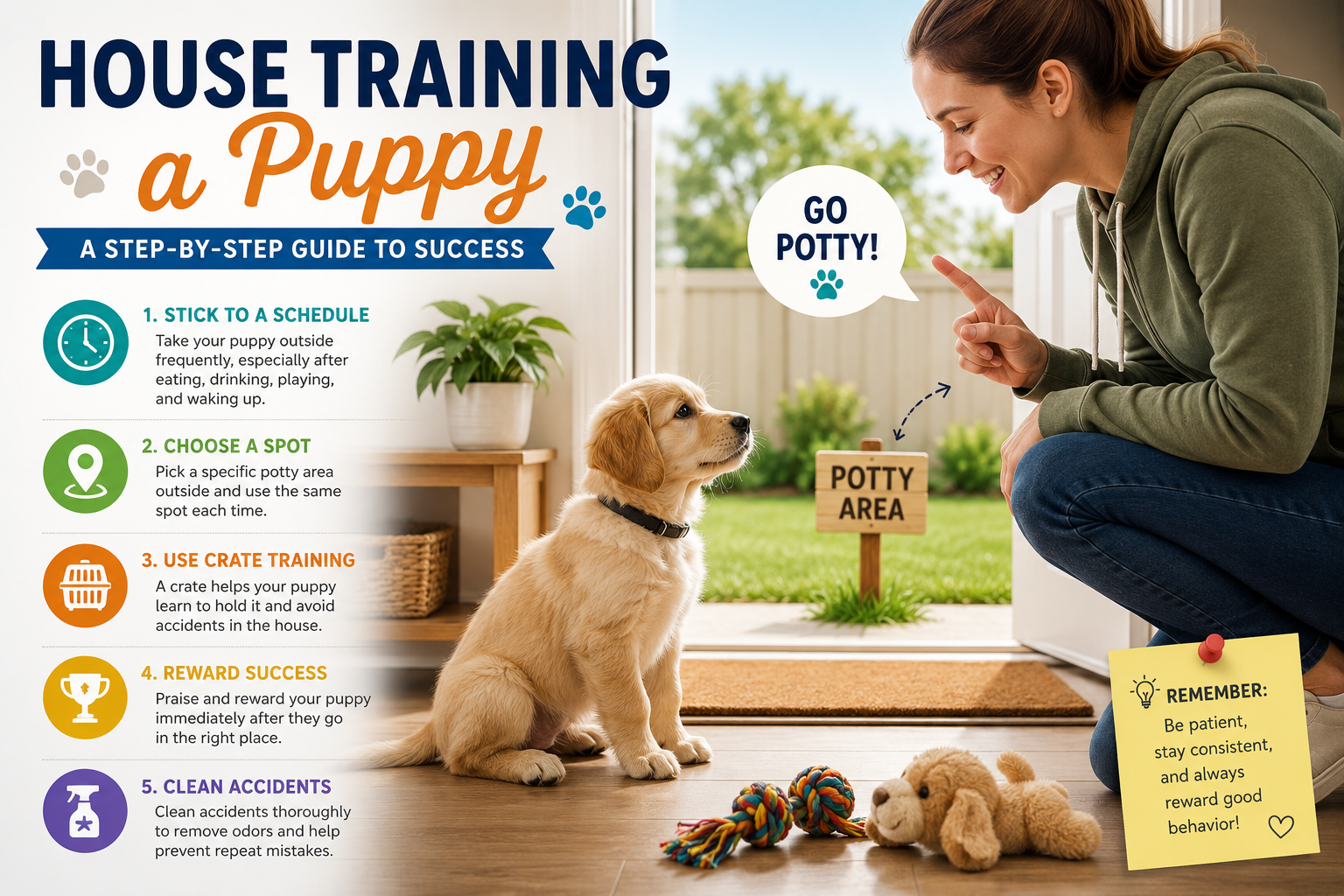
House Training a Puppy: A Complete Guide for First-Time Dog Owners – Bringing home a new puppy is an exciting experience, but one of the first challenges every owner faces is house training. Teaching your puppy where and when to go potty is an essential part of raising a well-behaved dog. While accidents are inevitable during the learning process, consistency, patience, and positive reinforcement can help your puppy develop good habits quickly.
This guide will walk you through the most effective house training methods and provide practical tips to make the process easier for both you and your puppy.
Why House Training Is Important
House training teaches your puppy appropriate bathroom habits and helps establish routines that contribute to a happy, healthy life. Puppies thrive on structure, and a consistent schedule helps them understand what is expected of them. Experts emphasize that successful house training depends on supervision, routine, and rewarding desired behavior rather than punishment.
The earlier you begin training, the easier it will be for your puppy to learn. Most puppies can start house training as soon as they arrive in their new home.
Understanding Your Puppy’s Bladder
One reason accidents happen frequently is that puppies have very small bladders and limited control over them. Young puppies often need bathroom breaks every one to two hours, especially after eating, drinking, sleeping, or playing.
As a general guideline:
- 2-month-old puppy: every 2 hours
- 3-month-old puppy: every 3 hours
- 4-month-old puppy: every 4 hours
Keep in mind that every puppy develops at a different pace, so some may need more frequent potty breaks.
Create a Consistent Schedule
A predictable routine is the foundation of successful house training. Puppies learn faster when feeding times, play sessions, and potty breaks occur at the same times each day. Consistency helps you anticipate when your puppy needs to go outside.
Take your puppy outside:
- Immediately after waking up
- After meals
- After drinking water
- After playtime
- Before bedtime
- Every one to two hours during the day
Keeping a schedule reduces accidents and builds positive habits.
Choose a Designated Potty Area
Select one specific spot outdoors where you want your puppy to eliminate. Taking your puppy to the same location every time helps them associate that area with bathroom breaks. The scent left behind also reinforces the behavior.
When you reach the potty area, use a simple cue such as:
- “Go potty”
- “Do your business”
- “Bathroom time”
Over time, your puppy will connect the phrase with the action.
Supervise Your Puppy Closely
Supervision is one of the most important aspects of house training. Puppies often show signs when they need to go, including:
- Sniffing the floor
- Circling
- Whining
- Walking toward the door
- Suddenly becoming restless
If you notice these behaviors, take your puppy outside immediately. Limiting your puppy’s access to only a few rooms during training can also prevent accidents and help you monitor them more effectively.
Use Crate Training Effectively
Many dog trainers recommend crate training as part of the house-training process. Dogs naturally prefer not to soil their sleeping area, making crates useful for teaching bladder control.
To use a crate successfully:
- Choose a crate that is appropriately sized.
- Make it comfortable with bedding and toys.
- Never use the crate as punishment.
- Allow regular potty breaks.
- Gradually increase crate time as your puppy grows.
A crate should be a safe and comfortable place where your puppy can rest.
Reward Success Immediately
Positive reinforcement is the fastest way to teach good behavior. Whenever your puppy goes potty in the correct location, reward them immediately with:
- Verbal praise
- Petting
- Small training treats
- Playtime
The reward should happen within seconds of the desired behavior so your puppy can make the connection. Experts consistently recommend celebrating successful potty trips to reinforce learning.
How to Handle Accidents
Accidents are a normal part of training. When they happen:
- Stay calm.
- Clean the area thoroughly.
- Avoid yelling or punishing your puppy.
- Increase supervision.
If you catch your puppy in the act, gently interrupt them and immediately take them outside to finish. However, scolding a puppy after the accident has already happened is ineffective because dogs do not connect delayed punishment with past behavior.
Never rub your puppy’s nose in the mess or use harsh punishment. These methods can create fear and confusion rather than improving training.
Nighttime House Training
Nighttime can be challenging, especially with young puppies.
To improve nighttime success:
- Take your puppy outside right before bed.
- Establish a consistent bedtime.
- Limit excessive water intake shortly before sleep while ensuring your puppy remains hydrated.
- Use a crate near your bed so you can hear when your puppy needs to go outside.
Young puppies may still need one or two nighttime bathroom breaks.
Common House Training Mistakes
Many owners unintentionally slow the training process by making these mistakes:
Inconsistent Schedules
Changing feeding or potty times daily can confuse your puppy.
Too Much Freedom
Allowing access to the entire house too soon often leads to hidden accidents. Many experienced owners recommend restricting access until house training is reliable.
Punishment-Based Training
Punishment may create fear but rarely teaches the correct behavior. Positive reinforcement is far more effective.
Missing Potty Signals
Ignoring signs such as sniffing or circling often results in preventable accidents.
Using Puppy Pads
Some owners use puppy training pads, particularly in apartments or during extreme weather conditions. Pads can be useful temporarily, but if your long-term goal is outdoor elimination, begin transitioning to outdoor potty breaks as soon as possible.
Place pads in a consistent location and reward successful use just as you would for outdoor training. Consistency remains the key to success.
Socialization and House Training
While house training focuses on bathroom habits, socialization also plays an important role in raising a confident puppy. Exposure to new environments, people, and experiences helps puppies become well-adjusted adult dogs. Positive experiences combined with regular routines can improve overall behavior and training success.
How Long Does House Training Take?
Most puppies make significant progress within a few weeks, but complete house training can take several months. Factors that influence training speed include:
- Age
- Breed
- Consistency
- Supervision
- Previous training experience
Some puppies learn quickly, while others require additional patience and repetition.
Final Thoughts
House training a puppy is one of the most important early lessons you can teach. Although accidents are inevitable, maintaining a consistent routine, supervising closely, rewarding success, and avoiding punishment will help your puppy learn faster.
Remember that every puppy learns at their own pace. Focus on progress rather than perfection, celebrate small victories, and stay patient throughout the process. With time and consistency, your puppy will develop reliable bathroom habits and become a well-mannered companion for years to come.