
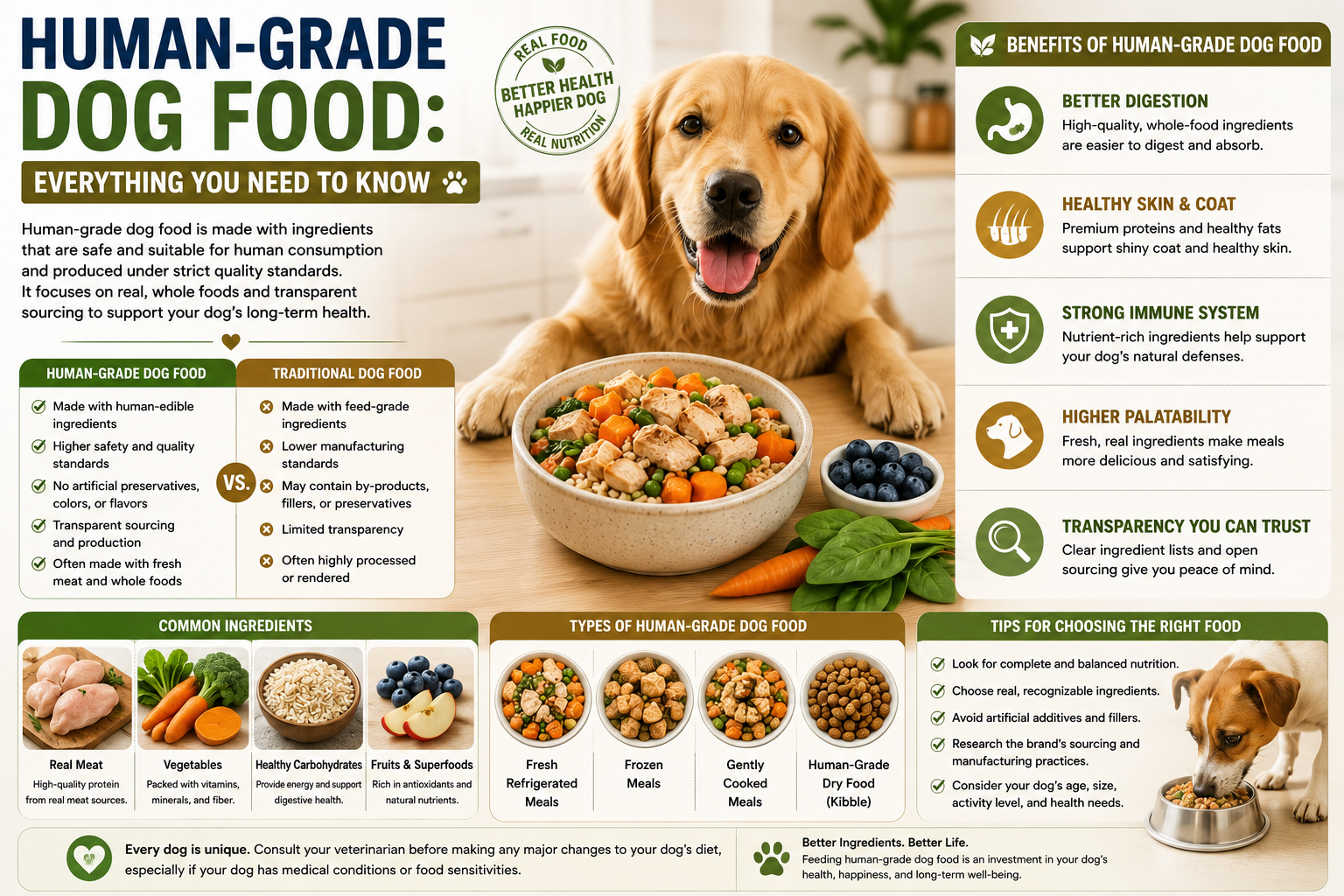
Human-Grade Dog Food: Everything You Need to Know – Dog owners today are more focused than ever on their pets’ health and nutrition. As a result, the pet food industry has seen a growing demand for premium products that prioritize ingredient quality and transparency. One trend that has gained significant attention is human-grade dog food.
Many pet parents are attracted to human-grade dog food because it promises higher-quality ingredients, better manufacturing standards, and improved nutrition. But what exactly does “human-grade” mean? Is it truly better than traditional dog food? And is it worth the higher price?
This comprehensive guide explains everything you need to know about human-grade dog food, including its benefits, potential drawbacks, and how to determine whether it’s the right choice for your dog.
What Is Human-Grade Dog Food?
Human-grade dog food refers to pet food made with ingredients that are legally edible for humans and produced under standards similar to those used for human food manufacturing.
To qualify as human-grade, every ingredient in the recipe must be human edible, and the food must be processed, stored, and transported according to regulations established for human food production.
This differs from traditional pet food, which may contain ingredients that are safe and nutritious for dogs but not considered suitable for human consumption.
Human-Grade vs. Feed-Grade Dog Food
Understanding the difference between human-grade and feed-grade food is essential.
Human-Grade Dog Food
Characteristics include:
- Human-edible ingredients
- Higher manufacturing standards
- Strict quality controls
- Transparent ingredient sourcing
- Often made with fresh meats and vegetables
Feed-Grade Dog Food
Characteristics include:
- Ingredients approved for animal consumption
- Manufactured under pet food regulations
- May include meat meals or by-products
- Generally more affordable
It’s important to note that feed-grade does not automatically mean low quality. Many reputable dog foods provide excellent nutrition despite not being classified as human-grade.
Why Human-Grade Dog Food Has Become Popular
Several factors have contributed to the rapid growth of this market.
Increased Focus on Pet Health
Many owners now view dogs as family members and want to provide the highest-quality nutrition possible.
Demand for Ingredient Transparency
Consumers increasingly want to know where ingredients come from and how food is produced.
Interest in Fresh Food Diets
Human-grade products often resemble freshly prepared meals rather than traditional kibble.
Growing Awareness of Nutrition
Pet owners are becoming more educated about canine nutrition and ingredient quality.
Common Ingredients in Human-Grade Dog Food
Many human-grade recipes focus on whole-food ingredients.
Examples include:
Protein Sources
- Chicken
- Turkey
- Beef
- Lamb
- Salmon
- Duck
Vegetables
- Carrots
- Spinach
- Sweet potatoes
- Green beans
- Pumpkin
Fruits
- Blueberries
- Apples
- Cranberries
Healthy Carbohydrates
- Brown rice
- Oats
- Quinoa
These ingredients are often recognizable and similar to foods people consume regularly.
Potential Benefits of Human-Grade Dog Food
High-Quality Ingredients
One of the primary advantages is ingredient quality.
Many human-grade foods avoid artificial preservatives, fillers, and lower-quality ingredients commonly associated with budget pet foods.
Improved Digestibility
Whole-food ingredients are often easier for dogs to digest.
Many owners report improvements in:
- Stool quality
- Digestive comfort
- Reduced gas
- More consistent bowel movements
Better Skin and Coat Health
High-quality protein sources and healthy fats may contribute to:
- Shinier coats
- Healthier skin
- Reduced dryness
Increased Palatability
Many dogs find fresh human-grade foods highly appealing.
Picky eaters often respond well to meals made with fresh ingredients.
Greater Ingredient Transparency
Human-grade brands frequently provide detailed information about sourcing and production methods.
This transparency can help owners make informed choices.
Is Human-Grade Dog Food More Nutritious?
Not necessarily.
The term “human-grade” refers to ingredient quality and manufacturing standards, not nutritional superiority.
A properly formulated feed-grade diet can be just as nutritionally complete as a human-grade diet.
The most important factor is whether the food provides balanced nutrition appropriate for your dog’s age, size, and activity level.
Quality nutrition depends on formulation, not simply marketing labels.
Types of Human-Grade Dog Food
Human-grade options come in several forms.
Fresh Refrigerated Meals
These are among the most popular products.
They often contain fresh meat, vegetables, and grains prepared in small batches.
Frozen Meals
Frozen diets preserve freshness and often contain minimally processed ingredients.
Gently Cooked Foods
These meals are lightly cooked to improve safety while preserving nutrients.
Human-Grade Dry Foods
Some manufacturers now offer human-grade kibble produced using higher-quality ingredients and processing standards.
Potential Drawbacks
Although dog food offers many benefits, it also has limitations.
Higher Cost
Human-grade products are generally more expensive than traditional dog food.
For large dogs, feeding exclusively human-grade meals can become costly.
Shorter Shelf Life
Fresh foods often require refrigeration or freezing and spoil more quickly after opening.
Storage Requirements
Owners need adequate refrigerator or freezer space.
Availability
Not all brands are available in every location.
Some products require subscription services or online ordering.
Which Dogs May Benefit Most?
Dog food can be particularly beneficial for:
Picky Eaters
Fresh ingredients often increase meal acceptance.
Dogs with Sensitive Digestion
Some dogs experience digestive improvements when eating minimally processed foods.
Senior Dogs
Older dogs may benefit from highly digestible ingredients and enhanced nutrient quality.
Dogs with Certain Food Sensitivities
Limited-ingredient human-grade diets can sometimes help identify problematic ingredients.
However, always consult your veterinarian before making major dietary changes.
How to Choose a Human-Grade Dog Food
Not all human-grade foods are created equal.
When evaluating options, consider the following.
Look for Complete and Balanced Nutrition
The food should provide all essential nutrients required for your dog’s life stage.
Review Ingredient Lists
High-quality protein sources should appear near the top of the ingredient list.
Check Company Transparency
Reputable brands openly share information about:
- Ingredient sourcing
- Manufacturing processes
- Quality testing
Consider Your Dog’s Needs
Factors include:
- Age
- Breed
- Activity level
- Weight goals
- Health conditions
A food that works well for one dog may not be ideal for another.
Transitioning to Human-Grade Dog Food
Sudden dietary changes can cause digestive upset.
A gradual transition is recommended.
A common approach is:
Days 1–3
75% current food
25% new food
Days 4–6
50% current food
50% new food
Days 7–9
25% current food
75% new food
Day 10
100% new food
Monitor your dog’s stool quality and overall comfort during the transition.
Homemade Food vs. Human-Grade Commercial Food
Some owners assume homemade meals are equivalent to human-grade diets.
However, creating a balanced homemade diet is challenging.
Commercial human-grade foods are typically formulated to provide complete nutrition, whereas homemade diets may unintentionally lack essential vitamins and minerals.
If you wish to prepare homemade meals, consult a veterinary nutrition professional.
The Future of Human-Grade Dog Food
The humanization of pet care continues to drive innovation within the pet food industry.
As consumers seek healthier, more transparent options, human-grade products are likely to become even more popular.
Future trends may include:
- Personalized nutrition plans
- Fresh meal subscriptions
- Functional ingredients
- Sustainable sourcing
- Customized dietary solutions
These developments reflect the growing emphasis on pet wellness and preventive health care.
Final Thoughts
Human-grade dog food has transformed the way many owners think about canine nutrition. By using human-edible ingredients and following strict manufacturing standards, these products offer a premium alternative to traditional pet food.
While human-grade food may provide benefits such as improved ingredient quality, enhanced palatability, and greater transparency, it is not automatically more nutritious than every conventional dog food. The most important factor remains balanced nutrition tailored to your dog’s individual needs.
Before making any dietary change, consider your dog’s age, health status, activity level, and budget. With careful research and guidance from your veterinarian, you can determine whether dog food is the right choice for helping your dog live a healthy, happy, and active life.