
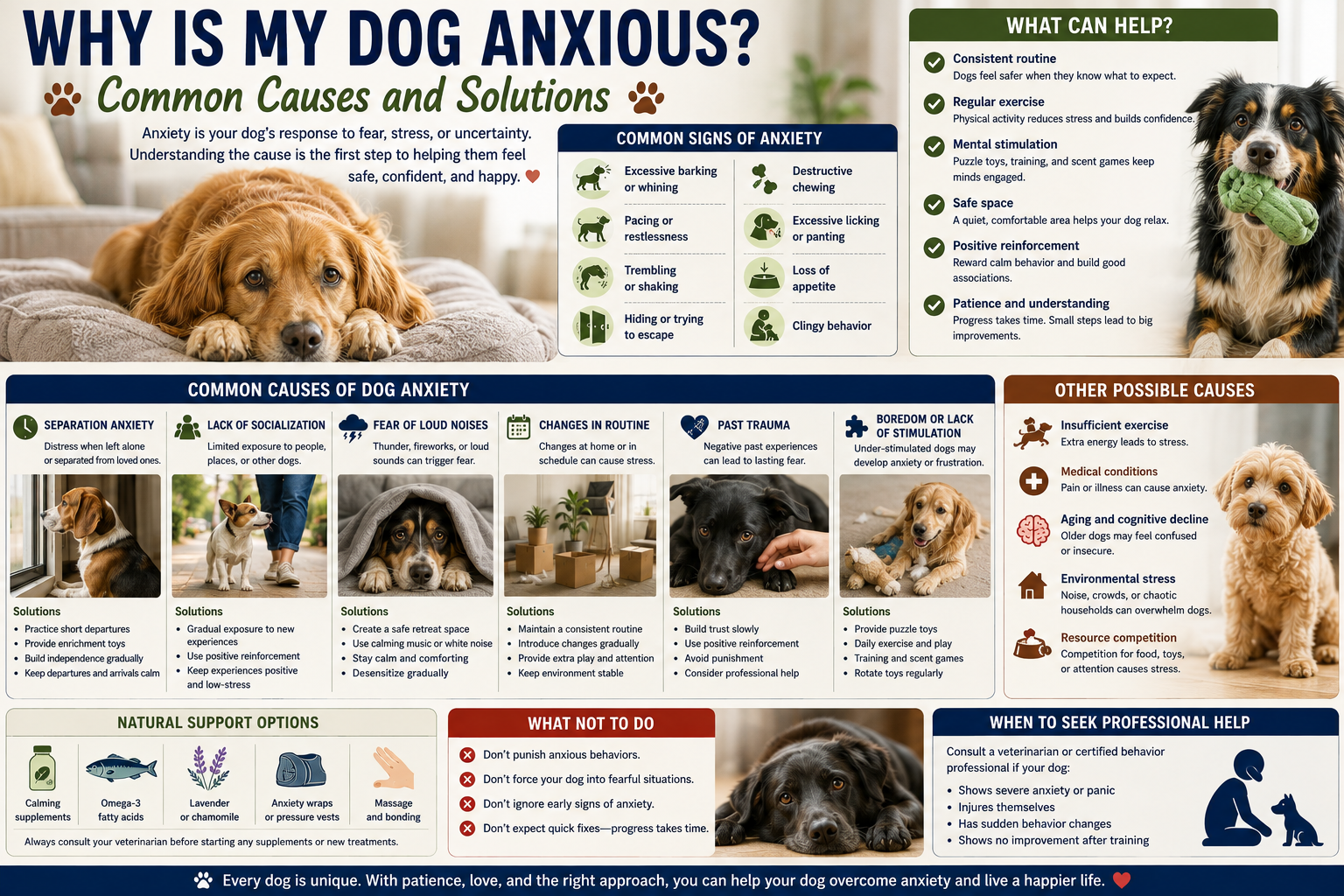
Why Is My Dog Anxious Common Causes and Solutions – Anxiety is one of the most common behavioral concerns among dogs, affecting pets of all ages, breeds, and backgrounds. While occasional nervousness is normal, persistent anxiety can negatively impact a dog’s physical health, emotional well-being, and quality of life. Many owners find themselves asking, “Why Is My Dog Anxious?” after noticing behaviors such as excessive barking, pacing, trembling, destructive chewing, or clinginess.
Understanding the reasons behind canine anxiety is the first step toward helping your dog feel more secure and confident. Anxiety is not simply bad behavior—it is often a response to fear, stress, uncertainty, or discomfort. Fortunately, many causes of anxiety can be addressed through training, environmental changes, routine adjustments, and proper veterinary care.
This guide explores the most common answers to the question Why Is My Dog Anxious, along with practical solutions that can help reduce stress and improve your dog’s overall well-being.
Understanding Anxiety in Dogs
Before exploring specific causes, it’s important to understand what anxiety actually is.
Anxiety occurs when a dog anticipates a threat or feels uncertain about a situation. Unlike immediate fear, which is a response to a present danger, anxiety often involves worry about what might happen.
An anxious dog may struggle to relax, even when no obvious threat is present.
Common signs include:
- Excessive barking
- Whining
- Pacing
- Panting
- Trembling
- Hiding
- Destructive behavior
- Excessive licking
- Restlessness
- Clinginess
- Loss of appetite
- Difficulty settling down
If you’ve ever wondered, Why Is My Dog Anxious, observing these symptoms can provide valuable clues about the underlying cause.
Separation Anxiety
One of the most common reasons dogs experience anxiety is separation from their owners.
Dogs are naturally social animals and often form strong attachments to family members. Some dogs become overly dependent and struggle when left alone.
Signs of Separation Anxiety
- Barking or howling when alone
- Scratching doors or windows
- Destructive chewing
- House soiling
- Excessive drooling
- Escape attempts
Solutions
- Practice short departures
- Use positive reinforcement
- Provide puzzle toys
- Build independence gradually
- Maintain a predictable routine
Many owners asking Why Is My Dog Anxious discover that separation anxiety is the primary issue.
Lack of Socialization
Puppies experience a critical socialization period during their first few months of life.
Dogs that were not exposed to a variety of people, environments, sounds, and experiences may become fearful and anxious as adults.
Common Triggers
- Strangers
- Other dogs
- New environments
- Traffic noises
- Crowded areas
Solutions
- Controlled exposure to new experiences
- Positive reinforcement training
- Confidence-building exercises
- Gradual desensitization
Socialization can significantly improve emotional resilience over time.
Fear of Loud Noises
Many dogs develop anxiety around loud or sudden sounds.
Common triggers include:
- Thunderstorms
- Fireworks
- Construction work
- Gunshots
- Vacuum cleaners
Noise anxiety is one of the most frequent answers to the question Why Is My Dog Anxious.
Signs
- Trembling
- Hiding
- Pacing
- Excessive panting
- Attempts to escape
Solutions
- Create a safe retreat area
- Use calming music
- Close curtains and windows
- Provide comfort without reinforcing fear
- Consider professional behavior support for severe cases
Changes in Routine
Dogs thrive on consistency and predictability.
Sudden changes can create uncertainty and stress.
Examples include:
- Moving to a new home
- New work schedules
- Changes in feeding times
- Family members moving away
- New pets or babies
Solutions
- Maintain consistent daily routines
- Introduce changes gradually
- Increase positive interactions
- Provide extra mental stimulation
Routine often plays a larger role in anxiety than owners realize.
Past Trauma or Negative Experiences
Rescue dogs and dogs with difficult histories may carry emotional scars from previous experiences.
Possible sources include:
- Neglect
- Abuse
- Abandonment
- Frequent rehoming
- Traumatic events
Dogs with traumatic backgrounds may become anxious in situations that remind them of past experiences.
Solutions
- Patience and consistency
- Positive reinforcement
- Trust-building exercises
- Avoid punishment
- Work with a qualified trainer if necessary
Understanding a dog’s history can help answer the question, Why Is My Dog Anxious.
Boredom and Lack of Mental Stimulation
Many dogs become anxious simply because they are under-stimulated.
Dogs were bred for jobs and activities. Without enough mental engagement, they may develop frustration and stress.
Signs
- Excessive barking
- Destructive chewing
- Digging
- Hyperactivity
Solutions
- Puzzle feeders
- Training sessions
- Scent games
- Interactive toys
- Regular exercise
Mental stimulation can dramatically improve behavior in many dogs.
Insufficient Exercise
Physical activity is essential for emotional health.
Dogs with excess energy often struggle to relax.
Benefits of Exercise
- Reduces stress hormones
- Improves sleep quality
- Releases endorphins
- Reduces boredom
Recommended Activities
- Daily walks
- Fetch
- Hiking
- Swimming
- Agility training
Exercise is often one of the simplest and most effective solutions for canine anxiety.
Medical Conditions
Sometimes the answer to Why Is My Dog Anxious lies in an underlying health problem.
Certain medical conditions can affect behavior and emotional state.
Examples include:
- Chronic pain
- Arthritis
- Thyroid disorders
- Cognitive dysfunction
- Neurological conditions
- Digestive discomfort
Warning Signs
- Sudden onset anxiety
- Personality changes
- Increased irritability
- Unexplained fearfulness
Veterinary evaluation is important whenever behavioral changes occur unexpectedly.
Aging and Cognitive Decline
Senior dogs may experience anxiety for reasons different from younger dogs.
As dogs age, they may experience:
- Hearing loss
- Vision problems
- Cognitive dysfunction syndrome
- Reduced mobility
These changes can create confusion and insecurity.
Solutions
- Maintain familiar routines
- Provide night lights
- Keep furniture arrangements consistent
- Offer gentle mental enrichment
Older dogs often benefit from additional reassurance and structure.
Genetic Predisposition
Some dogs naturally appear more sensitive or nervous than others.
Breeds often associated with higher anxiety levels include:
- Border Collies
- German Shepherds
- Australian Shepherds
- Vizslas
- Shetland Sheepdogs
However, any breed can develop anxiety.
Genetics may influence how a dog responds to stress, but training and environment also play significant roles.
Environmental Stress
Dogs constantly absorb information from their surroundings.
Stressful environments may contribute to anxiety.
Examples include:
- Constant noise
- Crowded homes
- Frequent disruptions
- Unpredictable schedules
Solutions
- Create quiet resting areas
- Establish routines
- Limit unnecessary stressors
- Provide opportunities for relaxation
A calm environment often helps anxious dogs feel more secure.
Resource Competition
In multi-pet households, anxiety may arise when dogs compete for resources.
Resources include:
- Food
- Toys
- Sleeping areas
- Human attention
Solutions
- Feed pets separately
- Provide multiple resting spots
- Supervise interactions
- Ensure equal access to resources
Reducing competition can significantly lower stress levels.
How Body Language Reveals Anxiety
Dogs communicate anxiety through subtle signals long before major behavioral issues develop.
Watch for:
- Lip licking
- Yawning
- Whale eye
- Tucked tail
- Flattened ears
- Avoidance behaviors
Recognizing these early signs allows owners to intervene before anxiety escalates.
Natural Ways to Reduce Anxiety
Many owners seek non-medication approaches first.
Helpful strategies include:
Exercise
Regular physical activity reduces stress.
Mental Enrichment
Puzzle toys and training sessions challenge the brain.
Predictable Routines
Consistency creates security.
Safe Spaces
A designated retreat helps dogs relax.
Calming Music
Soft background sounds may reduce stress.
Positive Reinforcement
Rewarding calm behavior builds confidence.
These approaches often provide significant improvement over time.
Common Mistakes Owners Make
When trying to help an anxious dog, owners sometimes accidentally worsen the problem.
Avoid:
- Punishing fearful behavior
- Forcing dogs into stressful situations
- Inconsistent routines
- Ignoring exercise needs
- Progressing too quickly during training
Patience is essential for long-term success.
When to Seek Professional Help
Some dogs require additional support.
Consult a veterinarian or behavior professional if your dog experiences:
- Severe panic
- Self-injury
- Extreme destruction
- Persistent anxiety
- Aggression linked to fear
- Significant appetite changes
Professional guidance can help identify the root cause and develop an effective treatment plan.
Building Confidence Over Time
Confidence is one of the best defenses against anxiety.
Ways to build confidence include:
- Positive reinforcement training
- Socialization
- Problem-solving games
- Controlled exposure to new experiences
- Consistent routines
Dogs that feel capable and secure are often better equipped to handle life’s challenges.
Final Thoughts
If you’ve been wondering, Why Is My Dog Anxious, the answer may involve one or several factors, including separation anxiety, lack of socialization, fear of loud noises, routine changes, boredom, medical conditions, or past experiences. Understanding the underlying cause is the key to finding effective solutions.
The good news is that most anxious dogs can improve significantly with patience, consistency, and the right support. By providing structure, exercise, mental stimulation, positive training, and a safe environment, you can help your dog feel calmer, more confident, and more secure.
Addressing anxiety early not only improves behavior but also enhances your dog’s overall happiness and quality of life.
Meta Description: