
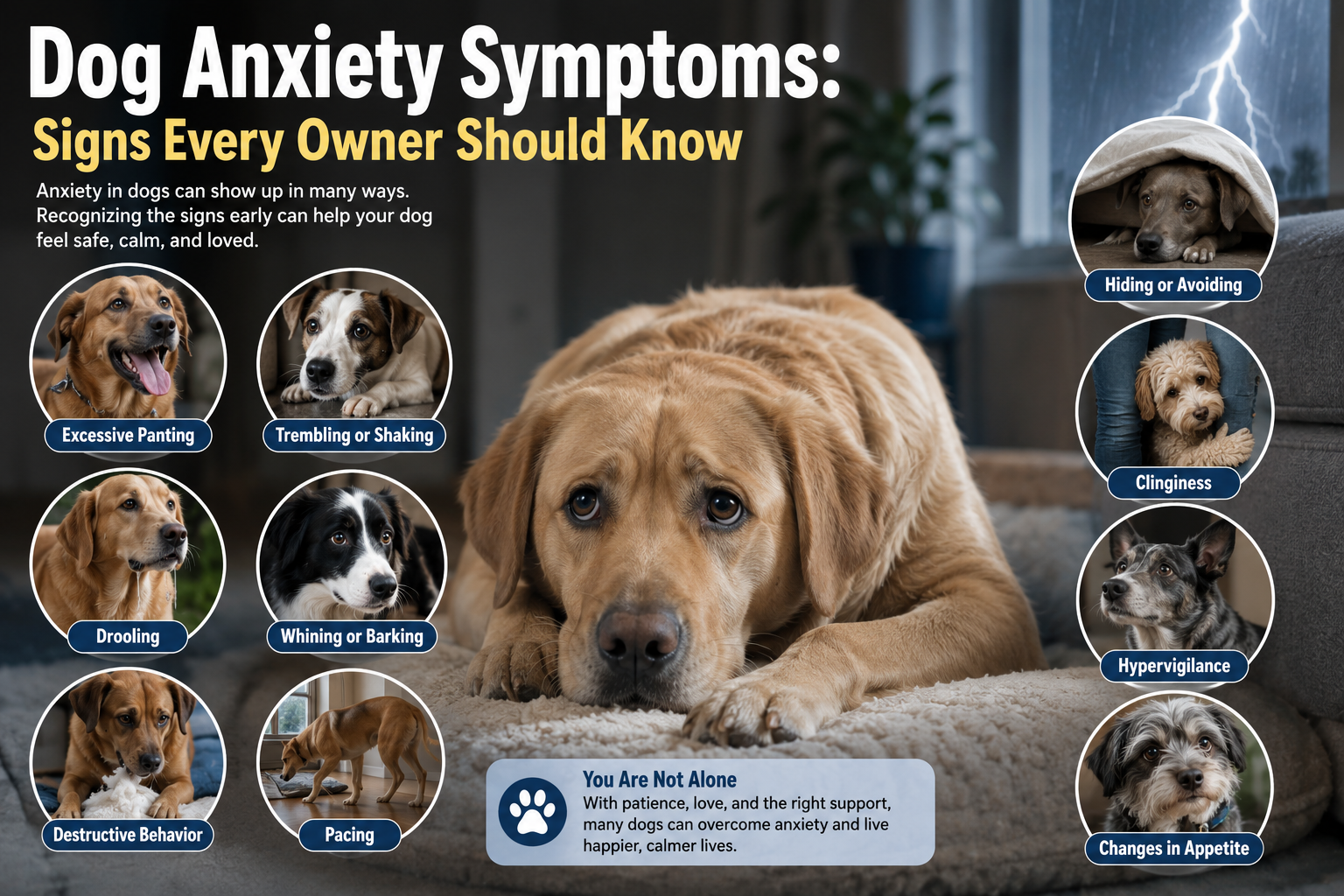
Dog Anxiety Symptoms: Signs Every Owner Should Know – Dogs are loyal companions that bring joy, comfort, and unconditional love to millions of households around the world. Just like humans, however, dogs can experience anxiety. While occasional stress is a normal part of life, chronic anxiety can affect a dog’s physical health, emotional well-being, and overall quality of life. Unfortunately, many pet owners fail to recognize the early signs of anxiety, often mistaking them for behavioral problems or simple personality traits.
Understanding dog anxiety symptoms is essential for providing the care and support your pet needs. The sooner anxiety is identified, the easier it becomes to address the underlying causes and help your dog feel safe and secure.
What Is Dog Anxiety?
Dog anxiety is a condition characterized by excessive fear, nervousness, or stress in response to specific situations, environments, or triggers. Anxiety can range from mild and temporary to severe and long-lasting. Some dogs may experience anxiety only during particular events, such as thunderstorms or fireworks, while others may struggle with daily stress caused by separation, unfamiliar environments, or social interactions.
Anxiety is more than just occasional nervousness. When left untreated, it can lead to destructive behavior, health issues, and a significant decline in a dog’s happiness and confidence.
Common Causes of Dog Anxiety
Before exploring the symptoms, it’s important to understand what may trigger anxiety in dogs.
Separation Dog Anxiety
One of the most common forms of canine anxiety occurs when dogs become distressed after being left alone. Dogs are social animals and often form strong bonds with their owners. Extended periods of isolation can cause significant stress.
Loud Noises
Thunderstorms, fireworks, construction sounds, and other loud noises can trigger intense fear and anxiety. Some dogs are particularly sensitive to unexpected sounds.
Changes in Routine
Dogs thrive on consistency. Moving to a new home, changes in family schedules, the arrival of a new pet, or even rearranging furniture can create uncertainty and stress.
Past Trauma
Dogs rescued from neglectful, abusive, or unstable environments may carry emotional scars that contribute to anxiety.
Aging and Cognitive Changes
Senior dogs can develop anxiety due to cognitive decline, reduced vision, hearing loss, or confusion associated with aging.
Physical Symptoms of Dog Anxiety
Many anxiety symptoms appear physically before behavioral changes become obvious.
Excessive Panting
Panting is normal after exercise or during warm weather. However, excessive panting without a clear reason may indicate anxiety.
An anxious dog may pant heavily even while resting indoors in a comfortable environment.
Trembling or Shaking
Dogs experiencing fear or anxiety often tremble. This reaction is common during thunderstorms, fireworks displays, or veterinary visits.
Drooling
Excessive salivation can occur when a dog feels stressed. Some dogs drool heavily during car rides or unfamiliar situations.
Increased Heart Rate
Although not always visible, anxiety often causes a dog’s heart rate to increase. Combined with panting and restlessness, it can be a strong indicator of stress.
Changes in Appetite
An anxious dog may lose interest in food or refuse meals entirely. In some cases, stress can also lead to overeating or obsessive food-seeking behaviors.
Digestive Issues
Anxiety can affect the digestive system, leading to diarrhea, vomiting, or an upset stomach.
Behavioral Signs of Dog Anxiety
Behavioral symptoms are often easier for owners to notice and may become more severe if anxiety remains untreated.
Excessive Barking or Whining
Dogs often vocalize when they feel stressed. Persistent barking, whining, or howling can be a sign that your dog is anxious or uncomfortable.
Dogs with separation anxiety frequently bark continuously after their owners leave the house.
Destructive Behavior
Chewing furniture, scratching doors, digging, or destroying household items can be an outlet for anxious energy.
These behaviors are often misunderstood as disobedience when they are actually signs of emotional distress.
Pacing
Repeatedly walking back and forth is a common anxiety symptom. Pacing often occurs before or during stressful situations.
Restlessness
An anxious dog may struggle to relax, constantly changing positions, walking around, or appearing unable to settle down.
Escape Attempts
Some dogs try to escape from crates, yards, or rooms when anxiety becomes overwhelming.
This behavior can be dangerous and may result in injuries.
Aggression
Fear and anxiety sometimes manifest as growling, snapping, or defensive aggression. A normally friendly dog may react negatively when feeling threatened or overwhelmed.
Emotional and Social Symptoms
Anxiety can significantly affect how dogs interact with people and other animals.
Avoidance Behavior
An anxious dog may hide under furniture, retreat to isolated areas, or avoid interaction with family members.
Clinginess
Some dogs become excessively attached to their owners and follow them constantly from room to room.
While affection is normal, extreme dependence may indicate underlying anxiety.
Hypervigilance
An anxious dog often remains on high alert, constantly scanning its surroundings and reacting quickly to minor sounds or movements.
Fear of New Experiences
Dogs suffering from anxiety may become reluctant to explore unfamiliar environments or meet new people.
Signs of Separation Anxiety
Separation anxiety deserves special attention because it is one of the most common anxiety disorders in dogs.
Symptoms often begin shortly after the owner leaves and may include:
- Continuous barking or howling
- Destructive chewing
- Scratching doors and windows
- House-soiling despite being house-trained
- Pacing
- Excessive drooling
- Escape attempts
Many owners are unaware these behaviors occur because they happen while the dog is alone. Pet cameras can help identify separation anxiety symptoms.
How Anxiety Affects Long-Term Health
Chronic anxiety is not merely a behavioral issue. Ongoing stress can negatively impact a dog’s overall health.
Long-term anxiety may contribute to:
- Weakened immune function
- Sleep disturbances
- Digestive disorders
- Weight loss
- Reduced quality of life
- Increased risk of behavioral problems
Over time, chronic stress can make dogs more vulnerable to illness and emotional instability.
How to Help an Anxious Dog
Fortunately, many dogs can improve significantly with proper care and support.
Create a Predictable Routine
Consistent feeding times, walks, and sleep schedules help dogs feel secure.
Provide Regular Exercise
Physical activity helps reduce stress and release excess energy. Daily walks, play sessions, and mental enrichment activities can be highly beneficial.
Use Positive Reinforcement
Reward calm behavior with treats, praise, and affection. Avoid punishment, which can worsen anxiety.
Create a Safe Space
Provide a quiet area where your dog can retreat when feeling overwhelmed. Comfortable bedding, familiar toys, and calming sounds can help.
Mental Stimulation
Puzzle toys, training games, scent work, and interactive activities can keep your dog’s mind engaged and reduce stress.
Consult a Veterinarian
If anxiety symptoms are severe or persistent, professional guidance is essential. A veterinarian can rule out medical conditions and recommend treatment options, behavioral training, or medication when necessary.
When to Seek Professional Help
Some anxiety symptoms require immediate attention, especially if your dog:
- Injures itself during escape attempts
- Shows sudden aggression
- Stops eating for extended periods
- Experiences severe panic attacks
- Displays symptoms that worsen over time
A certified dog behaviorist or veterinarian can develop a personalized treatment plan to address your dog’s specific needs.
Final Thoughts
Recognizing dog anxiety symptoms early can make a significant difference in your pet’s health and happiness. Excessive barking, destructive behavior, pacing, trembling, clinginess, and changes in appetite are all potential warning signs that should not be ignored.
Every dog experiences stress differently, which is why careful observation is so important. By understanding the causes of anxiety and responding with patience, consistency, and proper support, owners can help their dogs feel safer and more confident.
A happy dog is not simply one that is physically healthy—it is also one that feels secure, relaxed, and emotionally balanced. Learning to recognize anxiety symptoms is one of the most valuable steps any responsible dog owner can take toward building a stronger and healthier bond with their beloved companion.